
Nearly a decade after the introduction of the Goods and Services Tax (GST), India’s mattress industry offers a compelling case study of how tax reform can reshape markets without necessarily transforming them entirely…
When GST was introduced in 2017, one of its principal objectives was to formalize the economy by creating a unified tax structure and encouraging greater compliance. The expectation was that organized manufacturers, with established accounting systems, documented supply chains and nationwide distribution networks, would gain a decisive advantage over smaller, informal operators.
In many respects, that prediction has proved accurate. Organized mattress brands have expanded their footprint, strengthened distribution networks, embraced e-commerce and introduced premium sleep products aimed at increasingly health-conscious consumers. Yet despite these gains, thousands of local mattress manufacturers continue to thrive across India, particularly in Tier-2 and Tier-3 markets where affordability often outweighs branding and advanced sleep technology.
The mattress industry therefore presents a fascinating paradox: GST has accelerated formalization, but it has not eliminated the informal sector. Reflecting on the broader economic environment, Sheela Foam Limited observed in its annual report that “ongoing structural reforms are poised to strengthen long-term growth prospects”, citing further rationalization of GST, progress in free trade agreements and continued improvements in the ease of doing business. The company believes that India’s strong domestic demand and improving manufacturing competitiveness will help sustain growth despite global uncertainties.
That optimism is reflected in the market itself. India’s mattress industry has witnessed significant growth over the past decade, driven by rising disposable incomes, rapid urbanization and increasing awareness of sleep health. What was once viewed as a simple household necessity is increasingly being positioned as a wellness product linked to physical health, productivity and quality of life. The emergence of memory foam, orthopedic, latex and hybrid mattresses has expanded consumer choice, while direct-to-consumer brands have transformed the way mattresses are marketed and sold.
Yet beneath this growth story lies a structural reality. The Indian mattress market remains deeply fragmented. According to industry estimates and market studies, a substantial portion of sales continues to come from regional and local manufacturers operating outside the organized sector. A Market research analysis notes that while organized players have steadily increased their market presence, a significant share of the industry continues to be controlled by regional and unorganized manufacturers. The report identifies a gradual shift toward branded products, but one that remains uneven across geographies and income groups.
For organized manufacturers, the challenge is not merely competing against rival brands. It is competing against an entire ecosystem of local enterprises that have served communities for decades and understand local market dynamics intimately.
How GST changed the rules
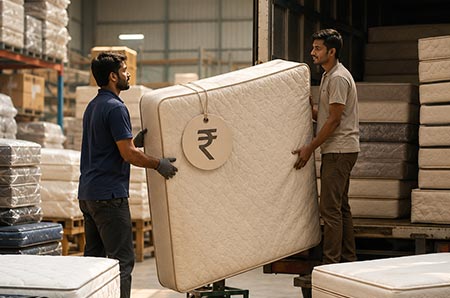
Before GST, manufacturers had to navigate a complex web of state taxes, entry levies and varying compliance requirements. Interstate movement of goods often involved multiple layers of documentation and logistical inefficiencies. For organised mattress companies, GST created a more predictable operating environment. Companies could consolidate warehouses, streamline procurement and distribution, and claim input tax credits on raw materials and components.This proved particularly beneficial in an industry that depends on multiple inputs such as polyurethane foam, coir, latex, springs, fabrics and adhesives. The ability to offset taxes paid on inputs reduced cascading taxation and improved supply-chain efficiency The implementation of GST has been a significant step towards formalizing India’s mattress industry, said Dr. Raj Kumar Bansal, Managing Director of Hindustan Group, a major player in the mattress sector. “Before GST, the unorganized sector enjoyed considerable tax advantages, enabling it to compete primarily on price. GST has created a more transparent and uniform taxation system, reducing this disparity and encouraging businesses to operate within the formal economy,” he said.
According to Dr. Bansal, GST has strengthened the organized mattress industry by improving tax compliance, streamlining supply chains through seamless input tax credits, and creating a more level playing field. “Organized manufacturers are now better positioned to invest in product innovation, advanced manufacturing technologies, quality assurance and nationwide distribution,” he said. “While the unorganized sector continues to hold a meaningful share of the market, it is increasingly adapting to the formal business environment. Compliance with GST and other regulatory requirements has become essential for sustainable growth, particularly as consumers and institutional buyers place greater emphasis on product quality, warranties and brand credibility.”
Industry players generally view GST as having strengthened organised manufacturers. In its analysis, GST Overhaul 2025: What It Means for the Mattress Industry in India, The Sleep Company argues that simplified compliance procedures, improved input-tax-credit management and greater digitisation have particularly benefited organised and direct-to-consumer brands. The company notes that the reforms have strengthened organised retail and supported premium product demand, while also enhancing operational efficiency through transparent billing and streamlined compliance systems. However, it also points out that mattresses continue to attract an 18 per cent GST rate, allowing lower-priced local manufacturers to remain highly competitive in price-sensitive markets. In the company’s words, the GST overhaul has strengthened organised retail, digitisation and premium-product demand, but affordability and the price gap with the informal sector remain continuing challenges.
National brands have also gained an advantage in institutional sales. Hotels, hospitals, educational institutions and large real-estate developers increasingly prefer suppliers capable of providing proper tax documentation, warranty support and compliance records. Such customers value traceability and accountability as much as price.
Traceability and accountability as much as price Mattresses in India generally attract an 18 per cent GST rate under HSN Code 9404. While the tax applies uniformly to registered manufacturers, its impact is felt differently across the market. Organised manufacturers collect and remit GST, maintain extensive compliance systems, generate digital invoices and absorb associated administrative costs. Many smaller local operators, by contrast, either function below registration thresholds or operate with significantly lower compliance burdens. The result is a visible price differential at the retail level.
A consumer entering a mattress showroom in a small town often encounters two very different options: a branded product backed by warranties, certifications and marketing campaigns, and a locally manufactured mattress that may be substantially cheaper. For households furnishing homes on tight budgets, affordability frequently outweighs considerations such as brand reputation, sleep technology or extended warranty coverage.
Market research notes that lower-price segments continue to account for a significant share of mattress demand in India. In such an environment, local manufacturers remain competitive because they can respond quickly to local preferences, customise products and operate with lower overheads.
This helps explain why GST’s impact has been evolutionary rather than revolutionary. The tax system has strengthened organised businesses, but it has not fundamentally altered the economic realities that sustain local manufacturing. Another factor often overlooked is the highly localised nature of mattress consumption in India. Unlike many consumer goods, mattresses are bulky products with significant transportation costs relative to their value, particularly in lower-price segments. This creates natural advantages for regional manufacturers located close to their customer base. Many local producers are able to manufacture, customise and deliver products within a short radius, reducing logistics expenses and shortening delivery times. In contrast, national brands must manage extensive distribution networks, warehousing infrastructure and marketing expenditure. While GST has streamlined interstate movement and reduced logistical friction, it has not entirely eliminated the economic advantages enjoyed by regional manufacturers operating close to their markets. As a result, local players continue to retain competitiveness not only through pricing but also through speed, flexibility and proximity to consumers.
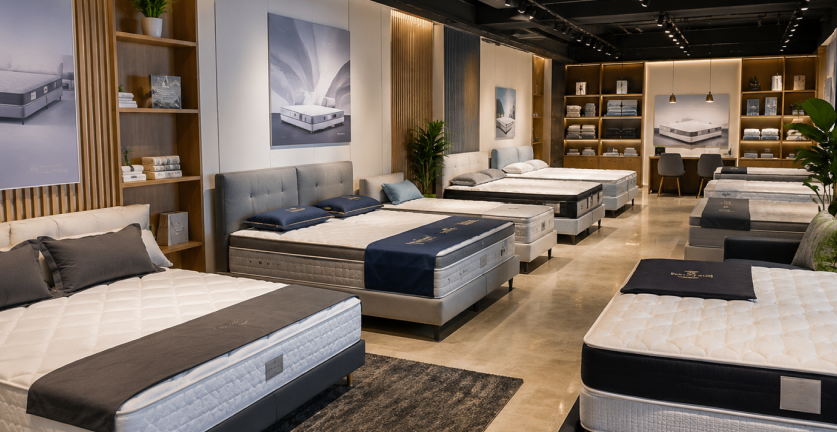
According to the Indian Sleep Products Federation (ISPF), GST is not a major concern for organised mattress manufacturers because they are able to claim input tax credit on virtually all raw materials and components used in production. However, the federation points out that exports present a different challenge. “Since exports constitute only a small portion of overall industry output, many manufacturers do not opt for GST payment and subsequent refund claims because of the procedural complexities involved. As a result, some exporters end up absorbing certain tax-related costs themselves, which can affect margins in overseas markets,” said a spokesperson. Wakefit similarly argues that GST has brought greater transparency and uniformity to the mattress market. In its consumer guide on mattress taxation, the company notes that the new regime has simplified business operations by eliminating multiple state-level taxes and making interstate trade significantly easier. At the same time, Wakefit acknowledges that the 18 per cent GST rate continues to influence purchasing decisions, particularly among price-sensitive consumers.
The tier-2 and tier-3 battleground
If metropolitan India represents the future of organized mattress retailing, smaller towns continue to reveal the enduring strength of the informal sector. In major cities, consumers are more likely to encounter premium mattress showrooms, online brands and sleep-health marketing campaigns. Younger consumers increasingly view mattresses as investments in health and comfort rather than simple household purchases. However, in Tier-2 and Tier-3 markets, purchasing decisions are often shaped by different considerations. Local manufacturers frequently enjoy stronger relationships with retailers and customers. They offer customized sizes, immediate delivery and products tailored to local preferences. Most importantly, they compete aggressively on price.Many consumers replacing a mattress are less concerned with advanced features than with obtaining a comfortable product within a limited budget. Consequently, local producers continue to retain significant market relevance despite the expansion of organized brands. The organized sector may be growing faster, but the unorganized sector remains deeply embedded in India’s retail landscape.
One of the most significant developments in the mattress industry has been the growth of e-commerce and direct-to-consumer business models. Brands such as Sleepwell, Kurlon, Wakefit and The Sleep Company have invested heavily in digital marketing, online sales platforms and customer-centric innovations such as sleep trials and extended warranties.
The traditional mattress purchase was once confined to neighborhood furniture stores. Today, consumers can compare products online, access reviews, consult sleep experts and receive mattresses delivered directly to their homes. Organized brands have also introduced health-focused innovations including orthopedic mattresses, memory foam technologies and hybrid sleep systems that cater to changing consumer preferences.
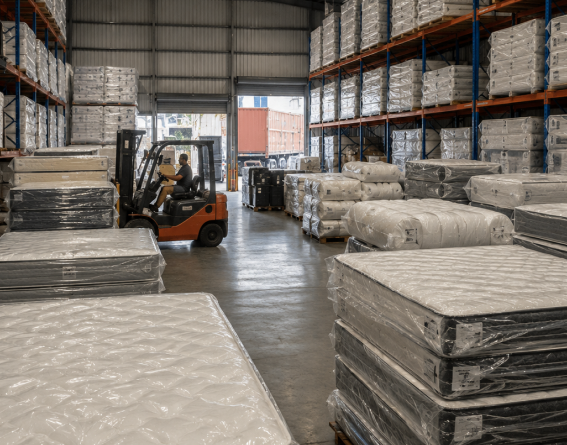
The Sleep Company notes that digitization, online sales channels and transparent GST-compliant pricing have created new opportunities for organized manufacturers. Such developments are helping formal-sector brands capture a larger share of value within the industry.Yet even here, local manufacturers continue to hold their ground. Mattresses remain tactile products, and many consumers still prefer to test them physically before making a purchase. Trusted local retailers therefore continue to play an influential role in consumer decision-making.
Formalization without elimination
Perhaps the most important lesson from the mattress industry is that formalization does not necessarily mean the disappearance of informal enterprise. GST has unquestionably strengthened organized manufacturers. It has improved transparency, enabled input tax credits, streamlined logistics and encouraged digital compliance. However, the unorganised sector continues to benefit from local market knowledge, lower operating costs and deep-rooted customer relationships.The mattress industry also illustrates the limits of policy-driven formalization. Tax reforms can alter incentives and reward compliance, but they cannot by themselves transform consumer purchasing power, local market structures or deeply embedded buying habits. The experience of the mattress industry suggests that formalization is a process rather than an event. While organized manufacturers increasingly dominate premium categories and institutional sales, the informal sector continues to thrive in segments where affordability remains the primary concern.
The future of India’s mattress industry appears promising. Rising incomes, growing awareness of sleep health, expanding digital commerce and increasing demand for premium products are likely to favour organised manufacturers. However, the pace of change is likely to vary considerably across regions and income groups. For millions of households, mattresses remain practical purchases governed primarily by affordability. Consequently, the industry’s future may not be defined by the replacement of local manufacturers but by the coexistence of multiple business models serving distinct consumer segments. This raises an important policy question. If mattresses are increasingly viewed as products that contribute directly to health, wellness and quality of life, should they continue to attract GST rates comparable to those applied to many discretionary consumer goods? Industry stakeholders have periodically argued that a lower GST rate could improve affordability and accelerate formalisation. What is clear, however, is that the mattress industry offers a revealing window into India’s broader economic transformation. Nearly a decade after GST, organised and unorganised enterprises continue to coexist, compete and adapt within a rapidly evolving marketplace. GST may have changed the rules of the game, but the contest for India’s sleep economy is far from over.
CEO Corner
Chandramohan Krishnadas, CEO FLORID MATTRESS
Despite extensive GST regulations, digitalisation and audits, mattress sales without GST remain widespread, particularly in Tier-II cities and smaller markets. Senior industry veterans are openly discussing how certain unorganised players sell significant volumes in such pockets; for GST-compliant manufacturers, the resulting 18% price disadvantage is simply too large to bridge. This uneven playing field must be addressed for the organised mattress industry to grow sustainably.
Industry in 5 Minutes
- Standardizing modern mattresses eliminated fragmented state-level VAT variations and entry taxes, establishing a seamless national market for major brands.
- GST compliance and digitized invoice systems have fueled the explosive growth of D2C sleep-tech brands and e-commerce platforms.
- The tax slab continues to act as a barrier for price-sensitive, lower-income buyers, allowing localized cash-based traditional cotton mattress makers to retain market share in rural and semi-urban pockets.
- Because key raw materials (like polyurethane foam components) are tied to global petrochemical prices and standard GST rates, compliance requirements leave organized players with less flexibility for informal price adjustments during margin crunches.