The mattress industry is no longer just about selling beds; it is now part of the wider sleep economy. This article explores this evolution, drawing parallels with the Fast-Moving Consumer Goods (FMCG) segment to highlight how agility, branding, and customer experience are the new battlegrounds for decades, the mattress industry followed a predictable, linear path. A manufacturer produced a slab of foam or a set of springs, sold it in bulk to a distributor, who then sold it to a multi-brand retail showroom. The manufacturer’s job ended at the warehouse dock. They had no idea who was sleeping on their product, what those people liked, or why they chose that specific model over a competitor’s.
Fast forward to 2025, and the landscape is unrecognizable. Following the lead of FMCG giants like Nike and Unilever, mattress brands are aggressively pivoting toward B2C (Business-to-Consumer) models. They are opening flagship stores, perfecting ‘Bed-in-a-Box’ logistics, and utilizing AI to recommend the perfect firmness level. This shift isn’t just a change in sales tactics; it’s a complete structural and cultural overhaul.
Why the traditional B2B model cracked
The traditional B2B model in the mattress sector suffered from three main pain points:
- Limited customer data : Manufacturers had a limited customer data of end-users.
- Margin erosion : Middlemen, distributors, and retailers each took a cut, forcing manufacturers to either lower quality or raise prices.
- The pushy salesman stigma : Traditional showrooms were often perceived as stressful environments where high-pressure tactics overshadowed actual sleep science.
In the FMCG sector, brands like Pampers (P&G) or Maggi (Nestlé) realized early on that while they sell through retailers, the brand belongs to the consumer. They invested in brand pull rather than retail push. Mattress companies are now adopting this. By going direct, they reclaim their margins and, more importantly, they own the relationship.
The D2C revolution: Bed-in-a-Box and beyond
The modern B2C mattress movement was ignited by digital-native brands like Casper, Sleepwell, The Sleep Company, and Wakefit. They realized that if you could compress a mattress into a manageable box, you could bypass the need for expensive specialized delivery teams and retail floor space.
Just as Coca-Cola aims to be within an arm’s reach of desire, D2C mattress brands aim to be within a click of a button. In an industry where trying a product in public for 30 seconds is awkward, D2C brands introduced 100-night trials. This mirrors the FMCG sampling strategy by lowering the barrier to entry until the consumer is hooked. While traditional retailers had 50 confusing models, D2C brands often start with just 2 or 3. This reduces decision fatigue, a concept mastered by FMCG companies who know that too many SKUs can actually hurt sales. If a manufacturer starts selling online for 20% less than their long-term retail partner, that partner will stop carrying their brand. Brands often create exclusive models for retail partners that aren’t available on their own D2C site, similar to how Nike creates specific sneakers for Foot Locker versus their own app.
The omnichannel strategy : The new gold standard
While D2C was a great start, the industry soon realized that mattresses are high-involvement purchases. Many people still want to touch and feel the fabric before spending a rupee. This led to the Omnichannel approach, a seamless blend of online and offline.
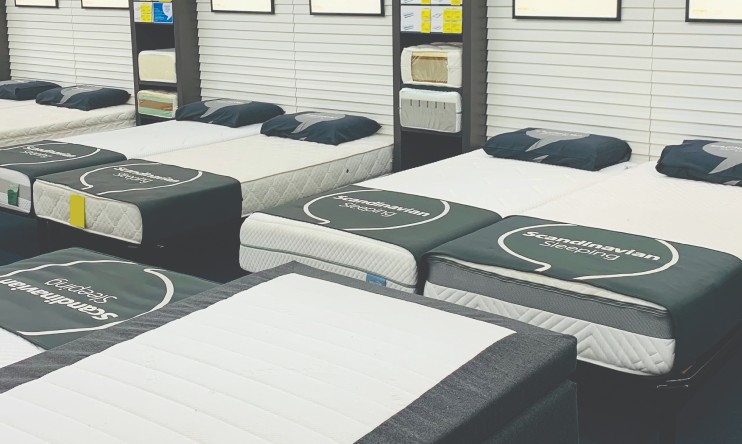
Companies like Saatva and The Sleep Company are opening physical showrooms that look less like warehouses and more like luxury spas. Much like an Apple Store, these spaces aren’t just for selling; they are for experiencing.
BOPIS (Buy Online, Pick Up In-Store) : Borrowed directly from retail giants like Sephora and IKEA, this allows customers to research at midnight, visit a store during their lunch break to confirm the feel, and have the mattress delivered to their doorstep the next day.
“The Direct-to-Consumer (D2C) model represents the next evolution in mattress marketing. Much like the shifts toward brick-and-mortar and traditional e-commerce before it, D2C offers a fresh way to engage modern audiences. Our research indicates that younger and first-time buyers are increasingly gravitating toward the D2C experience”, says Mr. Manoj Sharma, Chief Sales Officer – Sleepwell and Kurlon. Look at L’Oréal. They sell through massive retailers (B2B), but also have high-end boutiques and a robust D2C website. They use each channel for different purposes. Mattress brands are doing the same: using retailers for reach and their own stores/sites for premium brand storytelling.
Challenges in the transition : It’s not all sweet dreams
Moving from B2B to B2C is fraught with operational nightmares. In B2B, you ship 500 mattresses to one warehouse. In B2C, you ship one mattress to 500 different apartments, often on the 4th floor without an elevator.
Returns are the silent killer of D2C. Handling a returned, unrolled mattress is a massive expense. Successful brands are partnering with local charities or specialized recyclers to manage this, turning a liability into a CSR (Corporate Social Responsibility) win. In a traditional B2B model, returns were rare and usually handled by the retailer. In the B2C Trial Period era, return rates can climb as high as 7% to 12%. For a high-margin product, this is a manageable cost, for a startup, it can be a death sentence. In some FMCG sectors, if a product is defective, the brand may issue a return-less refund telling the customer to keep or discard the item because the shipping cost exceeds the product value. You can’t tell a customer to just throw away a king-size mattress. Successful mattress brands manage their returns through a tiered hierarchy, similar to how Unilever or P&G manage product life cycles:
Marketing in the age of sleep science
The transformation of the mattress industry from a sleepy furniture category into a high-stakes segment of the Fast-Moving Consumer Goods (FMCG) and Consumer Healthcare sectors has fundamentally changed how products are sold. Marketing is no longer about selling a bed, it is about selling a scientifically-backed sleep solution.

The move from comfort to sleep optimization
- The message : Brands are moving away from adjectives like plush or cozy and toward terms like thermoregulation, spinal decompression, and REM cycle optimization.
- The science : Marketing collateral now often includes heat-mapping data to show how a mattress keeps the body at the ideal 18°C for sleep, or pressure-mapping charts that prove a reduction in tossing and turning.
The rise of evidence-based branding
- Medical credibility : We see an increase in mattresses certified by the National Health Academy or Recommended by the Indian Association of Physiotherapists.
- The ingredient brand : Just as FMCG brands market specific ingredients (like Fluoride in toothpaste), mattress brands now market specific material technologies, such as Cool-Gel Memory Foam, Copper-Infused Latex, or NASA-approved foams. This creates a perception of a high-tech, engineered product rather than a commodity.
Hyper-personalization through AI and data
- Sleep assessment tools : Digital marketing funnels now often begin with a sleep quiz that analyzes a user’s BMI, sleeping position, and chronic pain points to recommend a specific model.
- Wearable integration : We are seeing the emergence of marketing partnerships between mattress brands and wearable tech, where data from your sleep tracker is used to justify an upgrade to a more supportive mattress.
Content as a conversion tool
- Fear of sleep deprivation : Campaigns focus on the link between a 10-year-old mattress and issues like cognitive decline, weight gain, and heart health.
- The recovery narrative : Positioning the mattress as an active gear for the modern professional. The marketing hook is that a better mattress doesn’t just make you sleep better, it makes you perform better at work and in the gym the next day.
The role of sustainability
In the wake of the mattress industry’s transition into an FMCG-led model, sustainability has shifted from a peripheral ‘green-washing’ tactic to a core driver of supply chain efficiency and brand equity. As mattresses are increasingly treated as health and hygiene products with faster replacement cycles, the industry is under pressure to solve the end-of-life crisis of its products.
From linear to circular : The material revolution
The traditional mattress was a landfill nightmare a complex assembly of glued foams, steel, and textiles that took centuries to decompose. The FMCG takeover has introduced circular design into the R&D process. Brands are moving away from 100% petroleum-based Polyurethane (PU) foams in favor of soy-based foams or natural latex. These materials offer a lower carbon footprint during production and are more biodegradable. To facilitate recycling, companies are adopting glue less assembly, using ultrasonic welding or mechanical tufting. This allows the mattress to be easily disassembled at the end of its life, separating steel springs from foam for high-grade recycling.
The packaging paradox : Automation & LDPE
In a high-volume FMCG environment, packaging is the most visible touchpoint of a brand’s environmental commitment. Large players are transitioning to LDPE (Low-Density Polyethylene) packaging.
This material is highly recyclable and can be reintegrated into the industrial supply chain. Automation can compress and create roll-packing mattresses, brands can fit up to 300% more units in a single truck. This dramatically reduces the carbon emissions per unit during the last mile of delivery.
Sustainability as a trust signal
For the modern conscious consumer, sustainability is a proxy for quality. FMCG marketing now leverages global certifications as a competitive moat. With the mattress industry growing at 10–12% annually, D2C currently holds a 5% market share, which is projected to double to 10% over the next five years. Ultimately, we anticipate a significant migration of consumers from the unorganized sector to the organized market, further expanding the industry’s total footprint , adds Mr.Manoj. Labels like CertiPUR-US or OEKO-TEX are no longer just for the elite, they are used to reassure customers that the mattress is free from harmful VOCs (Volatile Organic Compounds) and ozone depleters. Brands are finding that consumers are willing to pay a 10–15% Sustainability Premium if the brand can prove its commitment to eco-friendly sourcing, such as using Global Organic Textile Standard (GOTS) certified cotton covers.
Reverse logistics : The future of the industry
The final frontier of the FMCG takeover is the management of the used mattress. Organized players are introducing exchange programs where old mattresses are collected. Instead of going to a landfill, the steel is sold to scrap markets, and the foam is upcycled into bonded foam for carpet underlays or soundproofing panels. As Indian regulations tighten around plastic and industrial waste, brands that invest in these reverse logistics early are positioning themselves as market leaders rather than laggards.
The future is consumer-first
The transition from B2B to B2C/Omnichannel is not a trend; it is the new survival requirement. By cutting out the complexity of the middleman and focusing on the Total Sleep Experience, mattress manufacturers are becoming true lifestyle brands. They have learned from the FMCG sector that the strongest asset isn’t the factory, it’s the customer data and the brand’s emotional connection to the user. As we move into 2026, the market is entering a phase of radical efficiency. The industry leaders will be those who can master a difficult duality, managing the intricate logistics of one providing a hyper-personalized, white-glove delivery experience for every individual customer while simultaneously maintaining the scale of millions through automated, high-volume production. In this new landscape, operational agility and brand intimacy are the twin engines of sustainable growth.