
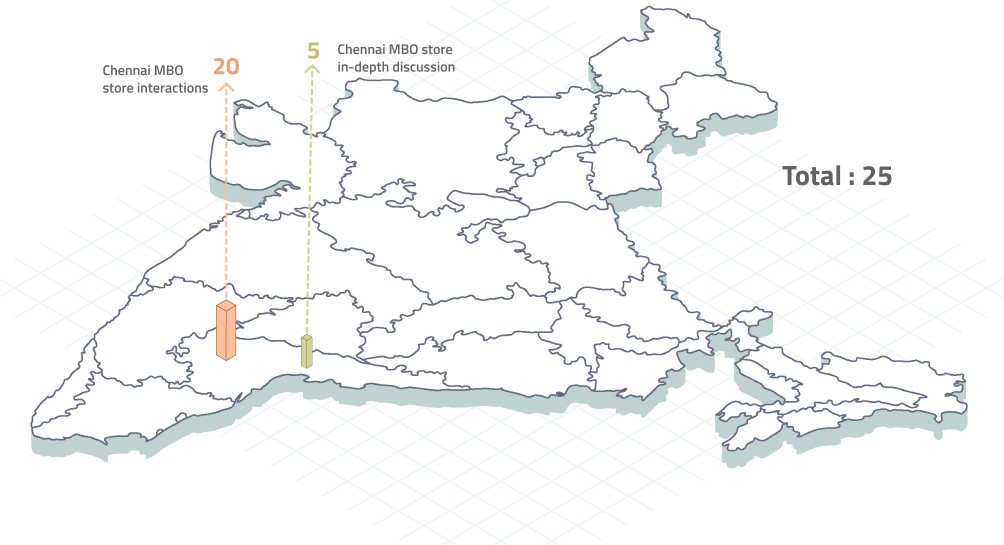
The research explores changing consumer behavior and the challenges faced by mattress retailers in a digital-first market. Conducted among 25 Multi-Brand Outlet (MBO) interactions in Chennai, highlights a significant shift in the mattress buying journey toward a digital-first approach. Online search has become the primary driver of store visits, with approximately 60% of interested customers reaching physical locations through online channels.
While social media and word-of-mouth influence about 40–45% of visitors, traditional local advertising has a much smaller impact at 15–20%. Despite this steady flow of digitally-influenced traffic, there is a notable gap in in-store engagement; retailers report that roughly 20 to 25 out of every 100 customers walk out of the store without ever interacting with a sales representative.
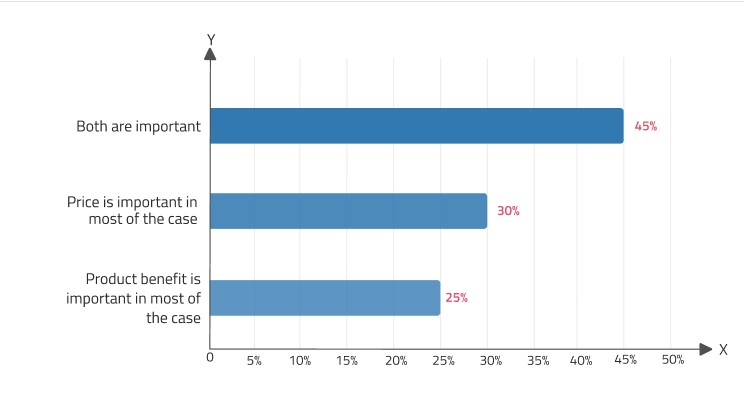
The perception of the market is also changing, as 60% of respondents now believe that more mattresses are purchased online than in physical stores. When customers do enter a store, their purchase decisions are primarily driven by a combination of price, firmness, material, and warranty. Interestingly, brand comparisons are not a top priority for most buyers, with 80% of customers failing to ask about the differences between branded and local options. While 30% of sales are driven by price alone, a larger segment of 45% considers both price and product benefits equally, suggesting that value-for-money is the ultimate deciding factor.
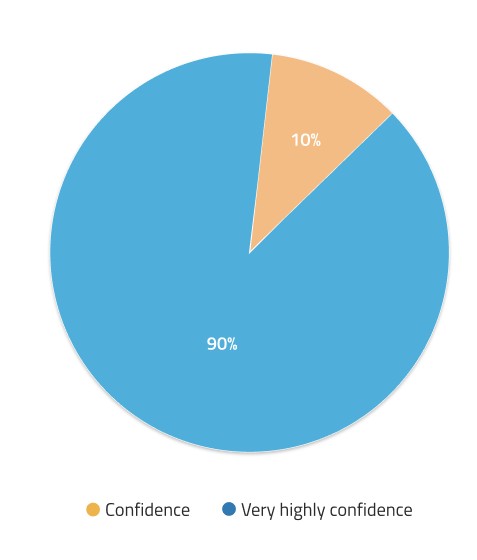
Store performance remains relatively healthy, with most outlets maintaining a 60% conversion rate and some high-performing stores reaching 80%. Sales staff appear well-equipped for these interactions, as 90% express high confidence in explaining premium materials and closing deals. While many believe no additional training is strictly required, there is an acknowledged opportunity to improve hands-on demonstrations and communication styles to better serve increasingly informed customers.
The retail landscape is currently navigating a period of intense turbulence, characterized by a dual threat: aggressive market saturation and the rapid migration of consumers to digital channels. Retailers cite this hyper-competitiveness and the ‘Amazon effect’ as their most critical pain points, as traditional walk-ins dwindle in favor of online browsing. To stem the tide of declining footfall, dealers are demanding a paradigm shift in manufacturer-retailer relationships. They no longer seek just inventory; they are actively looking for brands to provide robust ecosystem support, specifically through hyper-local digital marketing, targeted advertising, and aggressive consumer schemes designed to lure internet-savvy shoppers back into physical stores.
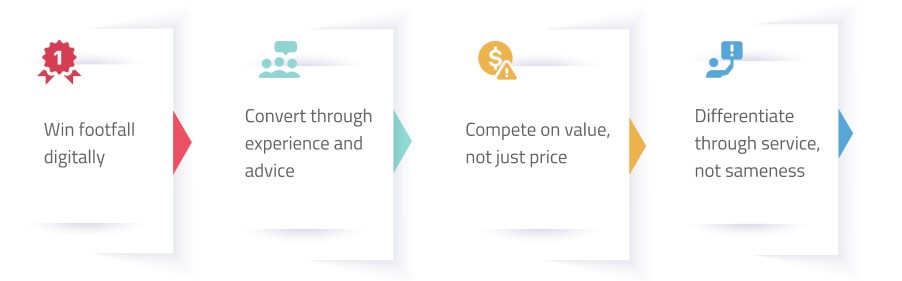
Furthermore, simply selling a product is no longer sufficient to guarantee survival. There is a burgeoning opportunity for retailers to pivot from being mere transaction points to becoming service hubs.

Research objective
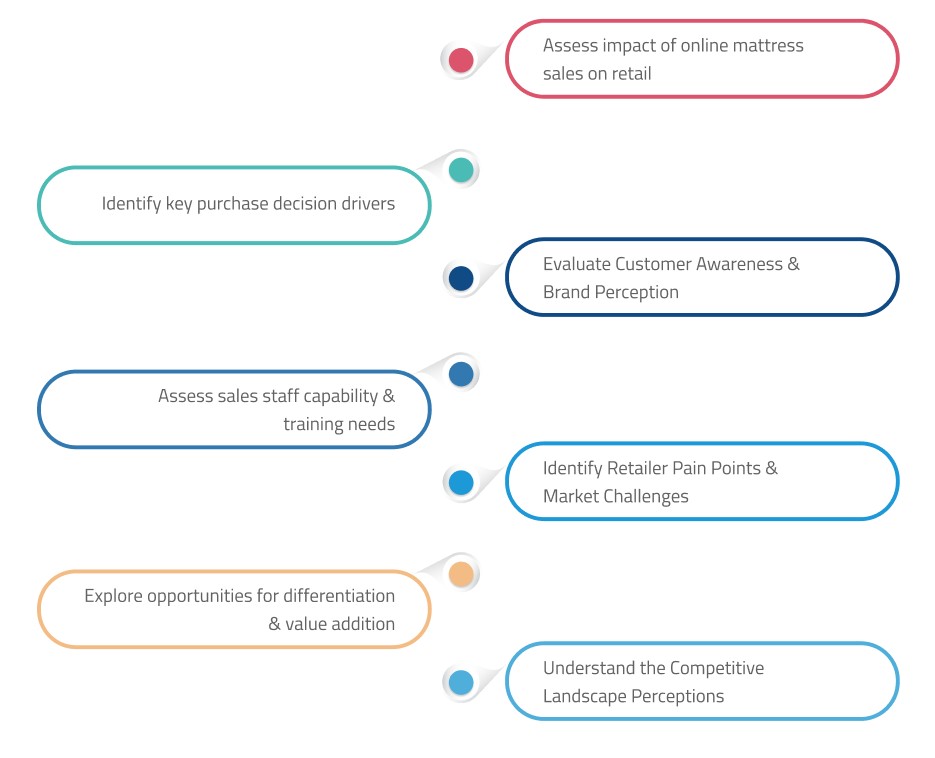
To understand changing consumer buying behavior and retail dynamics in the mattress category, with a focus on store footfall drivers, sales conversion factors, and challenges faced by retailers in an increasingly digital-first purchase environment.
Understand store footfall drivers
- To identify the key channels influencing store visits, including online search, social media, word-of-mouth, and local advertising.
- To assess the relative importance of digital vs offline touchpoints in driving customer walk-ins.
Sample size
Changing customer path to store
- Retailers and brands must strengthen digital visibility and ensure store presence is discoverable online to sustain footfall.
- Social media and word-of-mouth play a strong supporting role, especially in reinforcing trust and recall.
- Traditional local advertising has a limited influence, indicating diminishing returns from offline-only efforts.
- Customer footfall is increasingly driven by online search, which acts as the primary trigger for store visits.
Online vs retail – perception gap
- A majority of consumers perceive that mattresses are now bought more online than in stores, even if the final purchase may still happen offline.
- This perception shift suggests customers enter stores already informed, often with price and product benchmarks in mind.
- Physical stores are increasingly used for touch-and-feel, reassurance, and negotiation, not discovery.
Implication: Stores must evolve from being product display points to experience and advisory hubs.
What really drives purchase decisions
- Customers prioritize price, firmness, material, and warranty, often evaluating these factors together.
- Most buyers do not actively differentiate between branded and local mattresses, indicating low brand-led decision-making at the store level.
- Nearly half of sales are driven by a balance of price and product benefits, rather than either in isolation.
Implication: Sales conversations should focus on value justification and comfort benefits, not just brand superiority.
Store performance & sales capability
- Average store conversion is healthy, but there is wide variation, with some stores significantly outperforming others.
- Sales staff generally show high confidence in explaining premium materials, suggesting capability is not a major bottleneck.
- Additional training is not seen as critical, but better communication, demonstrations, and use of technology could enhance effectiveness.
Implication: Best practices from high-conversion stores should be replicated to lift overall performance.
Key challenges & opportunities for differentiation
- Price comparison and online competition are the biggest challenges in store differentiation.
- Retailers find it difficult to clearly identify competitor advantages, reflecting market clutter and sameness.
- Moderate interest exists for expert sleep advice and services like AMC, indicating potential for value-added differentiation.
Implication: Differentiation must come from expert guidance, service add-ons, and smarter digital + in-store integration, not just discounts.
Takeaway from qualitative interaction
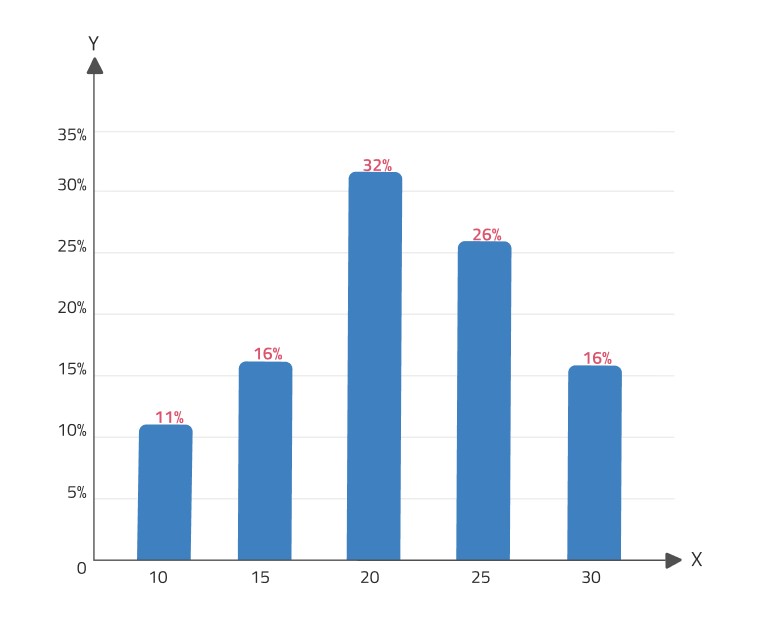
Year-on-year average store footfall
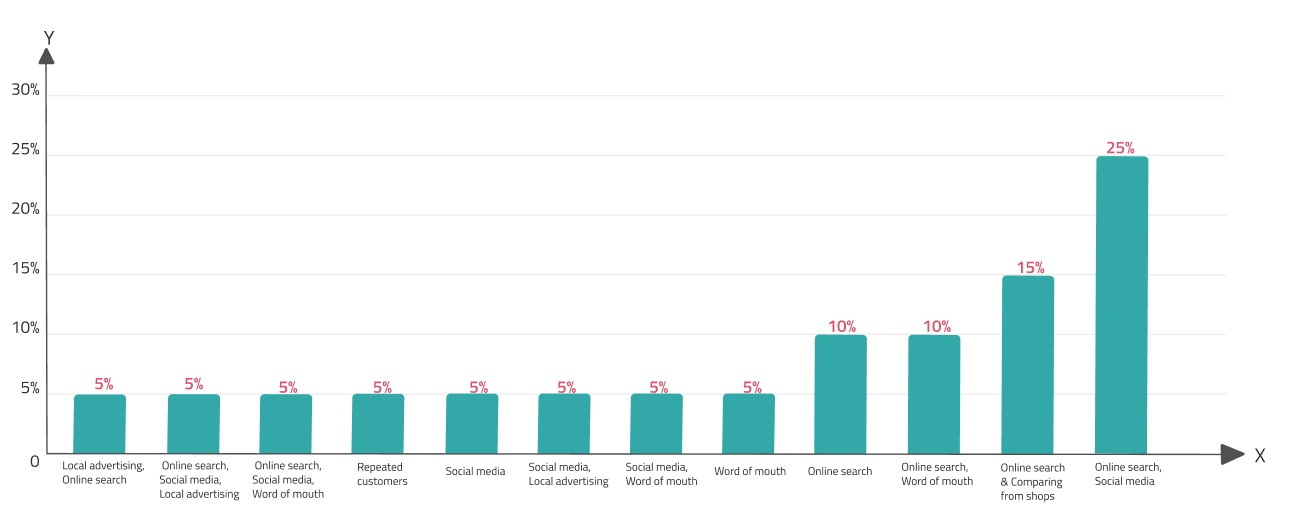
Around 60% of interested customers reach the store through online search, either alone or in combination with other channels. Social media and word-of-mouth together influence approximately 40–45% of visitors. On the other hand, local advertising contributes a smaller share, roughly 15–20%.
Key non–walk-in channels influencing store footfall
Around 60% of interested customers reach the store through online search, either alone or in combination with other channels. Social media and word-of-mouth together influence approximately 40–45% of visitors. On the other hand, local advertising contributes a smaller share, roughly 15–20%.
Understanding customer-sales interaction patterns
The findings clearly show that a large number of customers leave the store without speaking to a sales representative. Most retailers believe that about 20 to 25 customers out of every 100 walk out without any interaction at all. Even those who report lower numbers still acknowledge this as a concern. Overall, this strongly highlights a serious gap in in-store customer engagement that can directly impact sales.
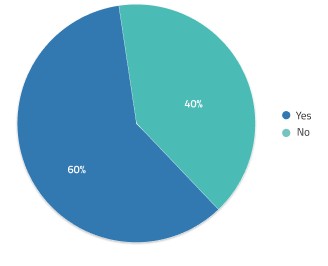
Perceived shift : online vs retail mattress sales
About 60% of people feel that more mattresses are being bought online than in stores, while 40% do not. This clearly shows that online shopping is becoming the preferred choice for most buyers, and retailers need to strengthen their online presence to keep up with this trend.
Top buyer priorities when shopping for mattresses
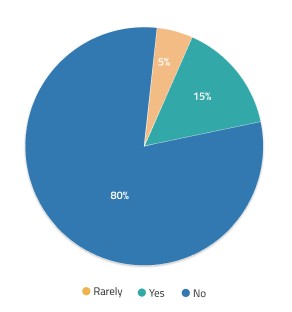
About 80% of customers don’t ask about differences between branded and local mattresses, whereas 15% do, and 5% ask occasionally. This shows that most buyers aren’t focused on brand comparison, so retailers should highlight other factors that matter more.
Top buyer priorities when shopping for mattresses
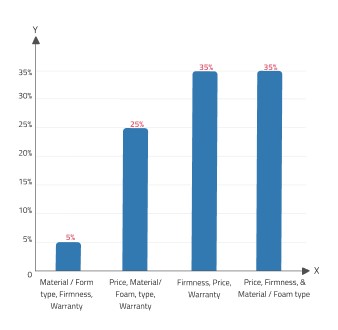
When shopping for mattresses, customers are mainly concerned with price, how firm the mattress feels, the type of material, and the warranty. Most people focus on combinations of these factors, showing that affordability and comfort are the most important considerations when choosing a mattress.
Understanding sales decision drivers
25% of sales are mainly influenced by product benefits, while 30% are driven mostly by price. In nearly half of the sales around 45%, both price and product benefits matter equally. This highlights that customers usually consider both value and cost before making a purchase.
Top buyer priorities when shopping for mattresses
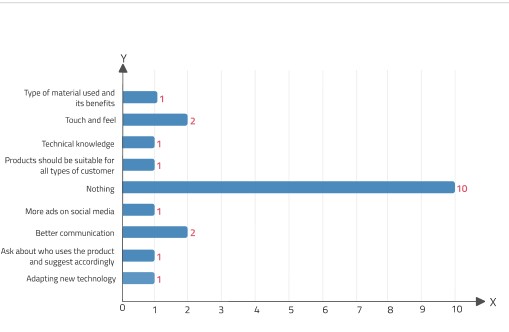
Most respondents feel that no additional training is needed to handle informed customers. However, some feel there is room to improve communication, product knowledge, and hands-on demonstrations. Adapting to new technology could further help improve conversions.
The core pain points of mattress retailers
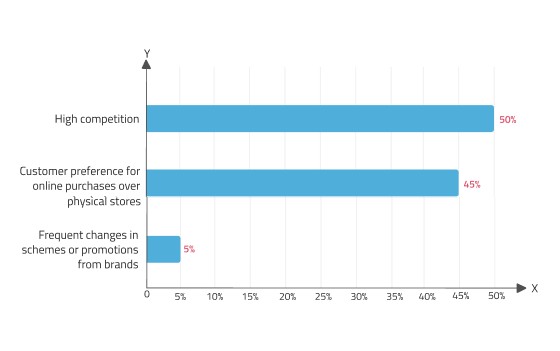
This shows that high competition is the biggest challenge for mattress retailers. Many retailers also face difficulties as customers increasingly prefer buying mattresses online rather than visiting physical stores. Frequent changes in brand schemes and promotions are a lesser concern. Overall, market pressure and changing customer buying behavior are the main pain points for retailers.
Understanding customer-sales interaction patterns
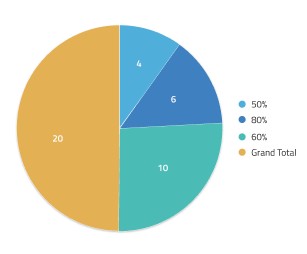
The majority of stores have an average conversion rate of 60%. Four stores are performing at 50%, while six stores achieve a higher rate of 80%. This shows that some stores are highly effective in converting visitors into buyers.
Sales staff confidence in explaining premium materials
Sales staff are well prepared to explain premium mattress materials to customers. A strong 90% are very confident, while only 10% show moderate confidence in explaining benefits and closing deals. This suggests that most sales teams can effectively communicate the value and advantages of advanced products.
Key brand initiatives to drive store footfall
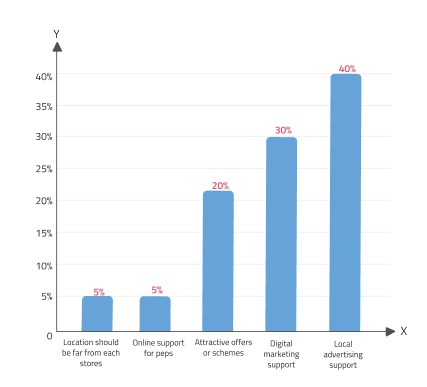
The responses show that most dealers feel brands can help increase footfall through stronger local advertising and digital marketing support. Attractive offers and schemes are also seen as an effective way to bring more customers into stores. A few respondents mentioned the importance of online support and better store location planning.
Feedback on annual maintenance service (AMC)
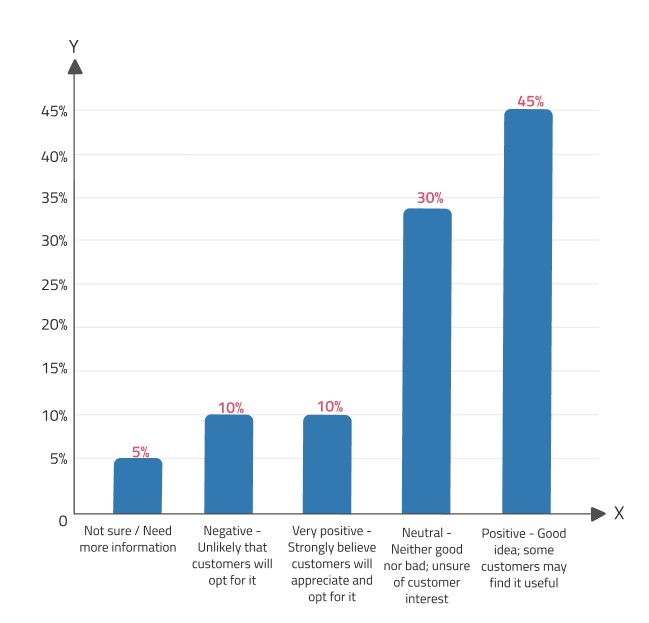
The data shows that 45% of respondents feel offering an AMC for maintenance and cleaning is a good idea that some customers may find useful. About 10% are very positive and believe customers will strongly appreciate it, while another 10% are negative and think customers are unlikely to opt for it. Around 30% are neutral, and 5% feel they need more information. Overall, most see it as a potentially useful service.
Customer preference for returning old mattresses
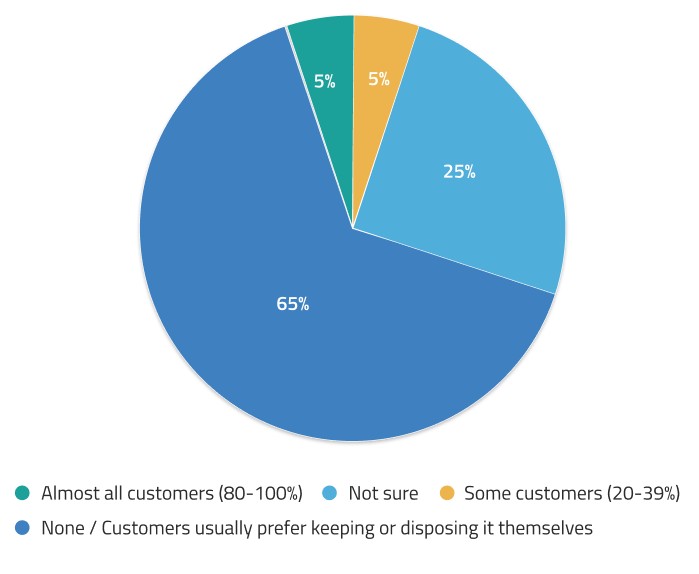
Most customers prefer to keep or dispose of their old mattresses themselves. Only a small portion of customers want to return their old mattress at no cost or a nominal fee, while some are not certain. This indicates that mattress returns are not a major demand among buyers.
Key challenges in store differentiation
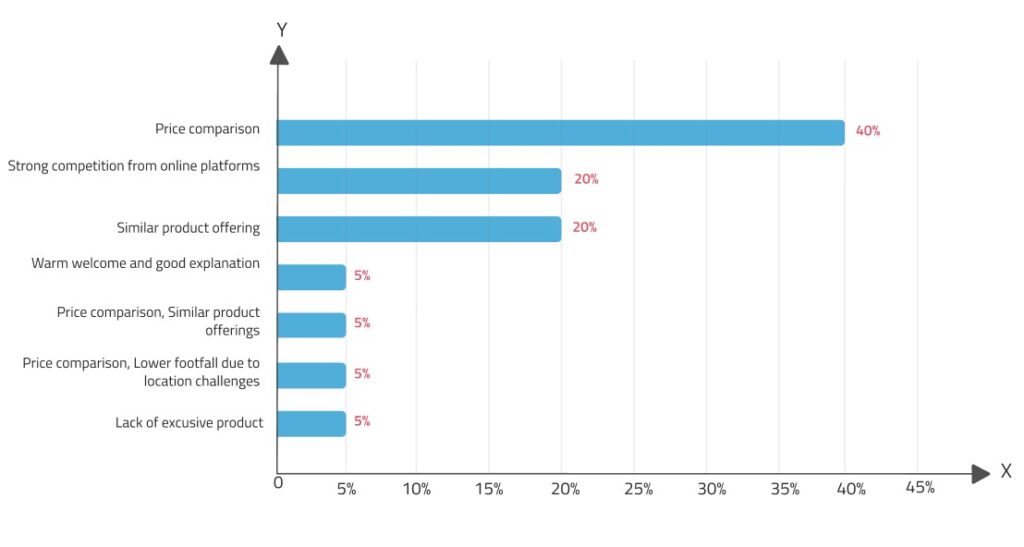
The data shows that the biggest challenge for retailers in standing out is price comparison, mentioned by 40% of respondents. Other common issues include strong online competition and similar product offerings, each affecting 20% of retailers. Smaller challenges include location, lack of exclusive products, and customer service factors.
Suggestions to boost store footfall
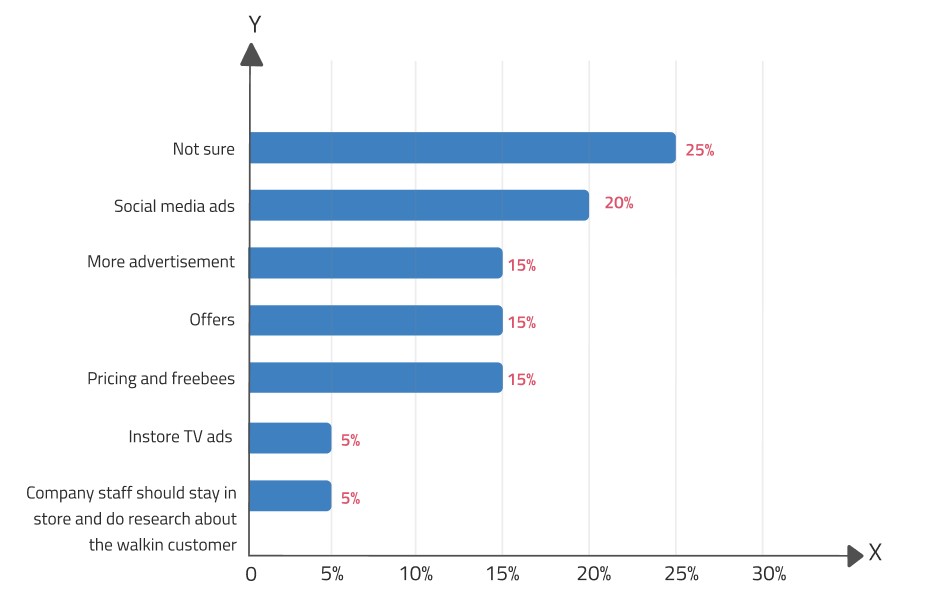
Responders feel that social media ads are the most effective way to attract more customers. Pricing strategies, freebies, and special offers are also considered helpful. In-store TV ads and having company staff observe walk-in customers are less preferred.
Customer interest in expert sleep advice
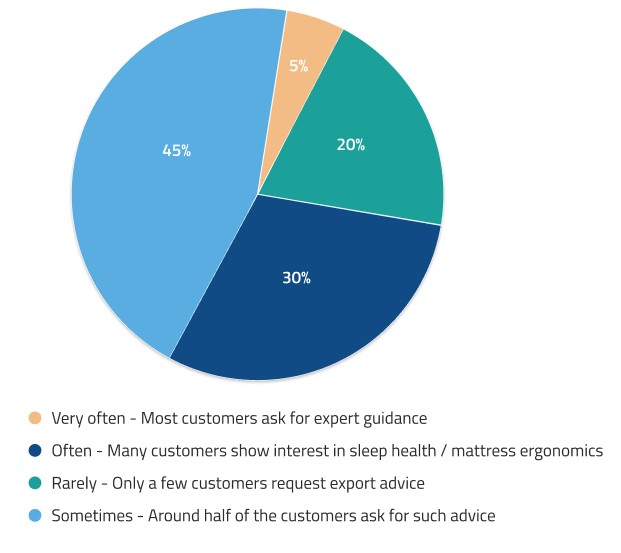
Among the responders, 45% sometimes seek expert advice on sleep health or mattress ergonomics, 30% often show interest, 5% ask very frequently, and 20% rarely seek guidance. This indicates a moderate overall interest in expert advice
Suggestions to boost store footfall
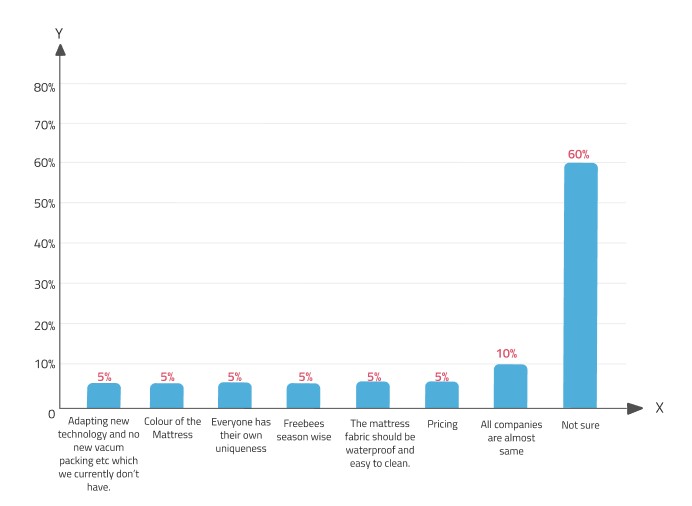
The majority of respondents expressed uncertainty regarding which competitor strategies pose the greatest threat, highlighting a lack of market clarity. Few pointed to pricing, unique product features, and value-adds like freebies. Mattress color, waterproof or easy-to-clean fabrics were also noted. Ultimately, the data suggests that many retailers struggle to pinpoint the exact competitive advantages of their rivals.