
Sleep does not mean only rest, it can be considered as the body’s natural defence mechanism. In fact, sleep boosts the immune system of the body and helps it fight infections. This article explores this connection between sleep and immunity of the body. Over the years, sleep has emerged as one of the most powerful, yet underutilised tools to boost overall health. Once seen as only a way of providing rest to the body, sleep is now recognised as an active biological process that has the ability to drive immune defence, hormonal balance and cellular recovery. Particularly, sleep has a huge impact on the immune system of the body which helps in healing wounds, keeping away infections and protecting the body against chronic and life-threatening illnesses. So, when the sleep is sound, body’s immune system becomes strong and it helps fight-off sickness.
The science behind sleep and immunity
There is a strong correlation between sleep and immunity. Physician and Diabetologist Dr Sumit Siroya says, “When the body enters the deep sleep phase, the immune system produces and releases cytokines such as Interleukin-1 (IL-1, Interleukin-6 (IL-6) and Tumour Necrosis Factor-Alpha (TNF-α).” Typically, cytokines are proteins that help and activate the infection fighting cells of the body so as to combat any infection and inflammation. Dr Sumit notes, “Even the immune cells such as T-cells and Natural Killer (NK) cells are activated during sleep which helps in detecting and destroying pathogens.”
When you get into the Rapid Eye Movement (REM) sleep phase, then the immune memory which is the process, by which the body remembers past infections to mount faster responses in the future, is also activated. However, when there is chronic sleep deprivation, all this process is disrupted and the body’s defence mechanism is weakened. This makes the body vulnerable to diseases. It is seen that serious sleeping problems including sleep disorders like insomnia, sleep apnea and circadian rhythm disruption, can impact the healthy functioning of the immune system.
Typically, sleep and the immune system share a bidirectional relationship. So, proper sleep enhances immune response, while infections often cause sleepiness which is an adaptive mechanism so as to promote healing of the body.
Dentist and implantologist Dr Rajat Varshaney says, “Sleep is crucial for overall proper functioning of the body. In fact, sleep impacts the oral immunity as well. During sleep, the immune system of the body is restored which then fights off the oral bacteria. So, poor quality of sleep increases the risk of oral health problems like cavities and gum diseases. In many cases, it is seen that sleep deprivation can also worsen inflammation, reduce protective substances in saliva and disrupt the body’s natural defence mechanisms, making the mouth more vulnerable to infection and decay.”
Sleep stages and immune function
Typically, there are four stages of sleep, including one for REM sleep and three that form non-REM (NREM) sleep. Different sleep stages contribute uniquely. The deep slow-wave sleep is generally associated with reduced sympathetic activity and increased growth-hormone secretion that supports T-cell proliferation and the consolidation of adaptive immune responses. Many studies have shown that even a slight reduction in the total sleep time can impair body’s markers of innate and adaptive immunity.
Dr Mamatha Patil, MD Professor of General Medicine, notes, “If the sleep is interrupted on a regular basis, then the body is not able to get into these four stages of sleep and the entire sleep process is affected. This leads to a major impact on the brain functioning, overall physical health and emotional well-being.” In fact, the inability to get into each sleep stage for a very long time can increase the risk of various diseases and lead to low immunity. Thus, quality of sleep is definitely important to stay healthy.
The impact of sleep duration on immune efficiency
When it comes to sleep, the duration of sleep assumes great importance as the quality and the relationship between sleep duration and immune efficiency is very interesting. While irregular sleep significantly impairs the body’s ability to defend itself against infections, insufficient sleep also leads to the same result. In fact, chronic sleep deprivation which means sleeping less than six hours a day on a regular basis can create a pro-inflammatory state in the body.
Various studies have pointed out that people who sleep less than six hours per night are four times more likely to catch a common cold, cough and other upper airway infections than those sleeping for seven or more hours. Dr Mamatha avers, “Beyond making people more prone to illness, chronic short sleep duration can also lead to conditions like metabolic syndrome, cardiovascular disease and inflammation-related disorders.” As per the University of California, San Francisco’s report, “Just one night of sleep deprivation can reduce natural killer cell activity by 70 per cent.”
Thus, in order to give a boost to the body’s defense mechanism and to produce the important immune cells and counter the pathogens, sleeping the right number of hours is very important. Gynecologist Dr Rajkumari Samar, Professor & Consultant, Geetanjali Medical College and Hospital, notes, “People should sleep for at least 7-8 hours in the night as it is during this time, the body repairs and rebuilds itself. Also, during healthy sleep, the body’s autonomic nervous system shifts to a state of parasympathetic dominance and the heart rate is lowered which is normal and essential part of the sleep cycle. Even your breathing normalises during sleep. The normalised heart rate and associated neuroendocrine changes during sleep create an optimal environment for the immune system to function effectively by supporting key the defence functions.” Simply put, during sleep, breathing and muscle activity slows down considerably, freeing up energy for the immune system to perform the critical tasks. Going by the comparison, 7-9 hours of sleep is essential for optimal immune functioning and both undersleeping and oversleeping can impair biological recovery and immune regulation.
Sleep and its role in vaccine responsiveness
Sleep also impacts the vaccine responsiveness to a very large extent. A 2023 meta-analysis of the associations between insufficient sleep duration and antibody response to vaccination published in Current Biology, found out that insufficient sleep which is less than six hours per night in the days surrounding vaccination significantly decreased the antibody response to viral vaccines. Various other studies in the past have linked sleep around vaccine to vaccine immunogenicity. For example, a German study has revealed that a single night of reduced sleep can lower the body’s production of antibodies after vaccination by nearly 50 per cent; indicating that sleep directly influences immune memory. Simply put, vaccination is also impacted by sleep duration and quality. So, by sleeping adequately during few days before and after the vaccination, people can improve and prolong their immune response, thereby making the effect of vaccine more effective.
India still not sleeping well
Despite numerous studies on the positive impact of sleep on overall health including the immune system of the body, Indians seem to be still not sleeping well. As per the survey ‘How India sleeps: 2025’ conducted by the social media platform LocalCircles on World Sleep Day 2025 i.e., March 15, “59 per cent of Indians surveyed got less than six hours of uninterrupted sleep daily.” This presents a grim picture.
Further, as per the 2023 Philips India Future Health Index survey, “80 per cent of adults reported sleep deprivation owing to variety of reasons including stress, excessive screen exposure and irregular work schedules.” Here, it goes without saying that the result is rising fatigue, lower productivity and weaker immune resilience. So, definitely a good night’s sleep is imperative for a good health.
Sleep your way for a healthier body
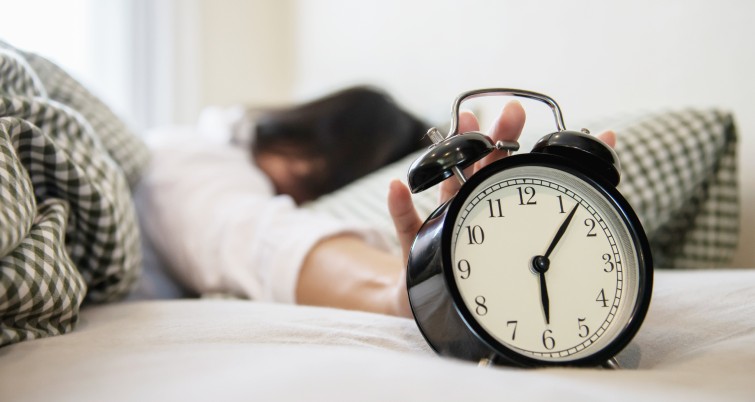
There is no doubt that for building immune strength, not only nutrition and exercise but adequate and quality sleep is important. Yet, in today’s environment, achieving truly restorative sleep requires more efforts than simply spending hours in bed. It demands intentional practices and the right sleep environment.
Basically, sleep improvement often starts by focusing on factors such as sleep hygiene which involves every day habits, routines, sleeping environment and even the mattress on which you sleep. That said, even simple steps can make it easier to get a good night’s sleep. So, here is how you can sleep well so as to boost the immune system and defence mechanism of the body.
- Give importance to consistency: The immune system of the body depends on the sleep routine you follow. Dr Sumit says, “Sleeping and waking up at the same time every day can help in the regulation of circadian rhythm, which, in turn, can synchronise hormone release and boost the immune function.” Some studies have proven that an individual’s circadian rhythm also helps in regulating the body’s reaction to allergens. So, when this circadian rhythm is disrupted, allergic reactions may aggravate.
- Create a sleep-conducive environment in the bedroom: Be it temperature, light or comfort, everything impacts the quality of sleep. So, it is essential that an ideal room temperature is maintained. Even the exposure to light before going to bed should be minimised to reduce melatonin production. “The environment in the room should be quiet, warm and dark, so as to ensure a good sleep,” says Dr Mamatha. Here, mattresses that can regulate microclimate through the usage of phase-change materials or moisture-wicking fabrics can play an important role in promoting uninterrupted sleep cycles.
- Go stress-free before sleep: Regular stress increases cortisol, (a hormone that suppresses immune responses) levels. Dr Rajkumari says, “Hypothalamus system in the brain regulates the sleep-wake cycles through the Suprachiasmatic Nucleus (SCN) and influences the immune function by coordinating stress responses and circadian rhythms.” So, simple steps such as progressive relaxation or writing a diary should be taken to decrease the stress levels. In this context, Dr Sumit avers, “Just before going to bed, you can also practice sleep yoga, meditation and deep breathing. This can also help your brain to cool down.” Dr Rajkumari notes, “Being a gynecologist, I always tell my patients to have a good night’s sleep as it promotes hormonal balance and increases the production of growth hormone which supports the immune cell function.”
- Limit blue light exposure: It is proven time and again that exposure to screens before bedtime disrupts melatonin production, thereby, delaying the onset of sleep. So, it is best to avoid the usage of any device before going to sleep. Dr Sumit says, “You should keep away from all your devices at least two hours prior to sleep.”
- Pay attention to nutrition: “Caffeine, heavy meals and alcohol before the bedtime can interfere with the sleep cycles considerably,” says Dr Mamatha. Hence, one should always avoid consuming such things before going to sleep. In fact, food should be consumed at least three hours prior to sleep. Dr Rajat says, “In order to sleep well, it is important to eat food on time as if you eat late in the night, then you will not be able to get a good sleep. This can lead to digestive problems, obesity, hypertension, increased blood sugar levels and the immune system is also negatively impacted.”
- Understand body’s sleep signals: Issues such as sleepiness, irritability and brain fog often indicate a sleep debt. So, when the body gives such signals, steps like extending sleep duration by at least half an hour every day should be taken, so as to ensure that the body functions properly at all times.
- Purchase the right mattress: The foundation of healthy sleep is definitely a mattress, so you need to invest in a good mattress. A pressure-relieving, temperature-stable and ergonomically aligned sleep surface minimises the instances of disruptive sleep and encourages longer deep sleep where the immune restoration is at its peak. Dr Rajat says, “It goes without saying that mattresses along with pillows play a huge role in promoting sound sleep. A good mattress can help the body to reach the deep sleep phase easily where major recovery of the body takes place.”
How mattresses influence the immune health?
Sleep and mattress go hand in hand. So, by developing sleep solutions that minimise sleep interruptions, maintain optimal temperature balance and support deep-sleep stages, mattress manufacturers can play a huge role in promoting immune efficiency and overall well-being. Here is how mattresses can ensure good sleep which can lead to better immune system.
- Pressure-relief and sleep continuity: Discomfort and continuous arousals in the night disrupt the sleep to a very large extent. So, mattresses that are engineered to reduce to peak pressure and provide appropriate support should be chosen. They reduce the awakenings and help in increasing the time spent in deep sleep stages, where immune signaling is the most active. That said, pressure-relief mattresses can lead to improved sleep efficiency.
- Thermal regulation and cytokine rhythms: It is often seen that the core body temperature and local skin micro-climate greatly influences the sleep onset and maintenance. In fact, overheating can lead to fragmented sleep and you may not be able to enter the deep sleep phase. Hence, mattresses made of materials that promote breathability and incorporate moisture management to maintain stable thermoregulation and support the nocturnal hormonal environment which favours the immune function, can come to help. Vipul Kumar, VP- New Product Development & Sustainability, Duroflex, says, “Increasingly, manufacturers are using cooling fabrics and hybrid mattresses that combine more than one type of technology. So, while the inner springs give better comfort and sleep to the consumer, the outer layer made from foam or latex provides better pressure relief, breathability and bounce.”
- Hygiene, allergens and immune activation: A mattress that contains dust mites or allergens can trigger chronic inflammation, thereby hampering the immunity of the body. So, hypoallergenic covers and antimicrobial but non-toxic finishes in the mattresses can be preferred as they can reduce the growth of allergens that hamper deep sleep.
- Smart features for personalisation: These days, mattresses incorporate smart features like sleep-tracking systems and adjustable firmness/zone control technology to ensure a good sleep. In addition, increased customisation in mattresses can also help to increase the sleep duration, align sleep timing and reduce fragmentation, all of which can promote more robust immune signaling.
Dr Mamatha says, “Cytokine release, immune cell activation, recovery and vaccine responsiveness, all happens during the sleep, so sleep quantity and quality assumes great importance.” This presents an excellent opportunity for the mattress manufacturers to come up with sleep products that can reduce fragmentation, control microclimate and limit allergen exposure. By designing, marketing and educating through the lens of immunity, the mattress industry can move beyond commoditisation towards becoming a partner in preventive wellness. This is because the future of sleep products is not just comfort; rather it is measurable support for a healthier and more resilient population.