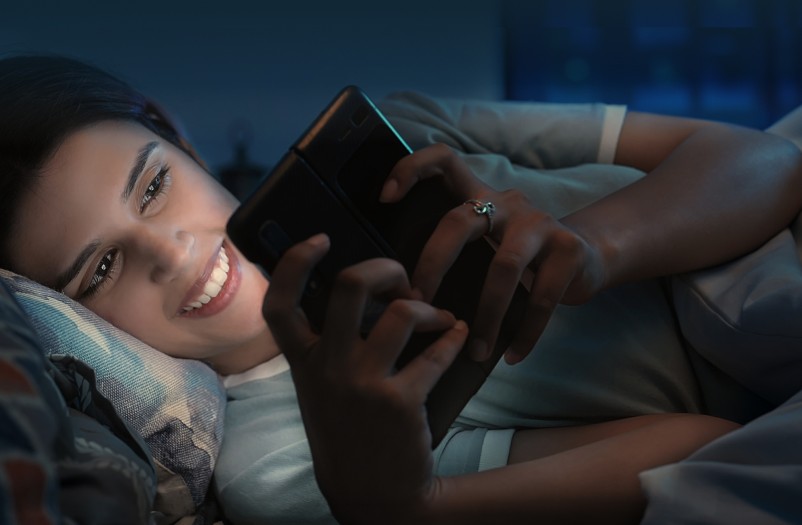
While the technological glow is making the country shine bright on the world map, it is quietly dimming our nights. As India’s 700 million smartphone users continue to scroll late in the night, their natural sleep rhythms are affected. This is giving rise to increased sleeplessness across generations. This article explores the impact of blue light on sleep. we are living in a world that never sleeps, like literally. Our devices often outlast our energy. Be it answering late-night emails to scrolling endlessly through social media or binge watching our favourite shows, technology has become an important part of our evenings and nights and our screens now accompany us even into our bedrooms. There is no doubt that these screens connect us with the world, yet it is these screens only, which through their blue lights, are responsible for disrupting one of our most fundamental human needs that is sleep.
n fact, blue light which is high-energy wavelength emitted from digital screens, LED lighting and smartphone, is a subtle but serious disruptor that’s reshaping the way we sleep. It suppresses melatonin production which is the hormone responsible for regulating our sleep-wake cycle and also impacts body’s circadian rhythm adversely, thereby leading to sleeplessness. This definitely presents a grim situation as sleep is not optional for recovery, rather it is a biological necessity. It is an irony that the very technology that is designed to make modern living easy and more efficient often ends up hampering our sleep which is the one process that helps us to function properly and optimally every time.
The science behind blue light
In order to understand the blue light dilemma, we need to understand the biology behind sleep. The sleep-wake cycle of the body is impacted by internal cues as well as environmental signals and the most powerful among them is light. When the natural light fades, brain’s pineal gland releases melatonin, which signals the body that it is time to cool down and sleep. However, when the blue light mimics the brightness of daylight, the melatonin production is suppressed and sleep is affected.
As per a study conducted by Harvard Medical School, even a 30 minute exposure to blue light before bedtime can delay sleep onset by up to 90 minutes. Ophthalmologist Dr Arun Kumar Samar says, “As against the warmer lights, blue light penetrates deeply into the retina and tricks the brain to believe that it is still the day time. Scientifically put, the blue light interacts directly with the Intrinsically Photosensitive Retinal Ganglion Cells (ipRGCs) which communicate with the brain’s master clock. So, when there is exposure to blue light after sunset, it confuses that system, leading to delayed sleep and poor rest quality.”
Rising number of night owls in India
There is no doubt that the digital transformation has taken India by storm but it has also impacted the sleep health of all the Indians. With remote work, online education and streaming platforms gaining prominence, screen time has increased like never before. As per the FICCI-EY report Shape the future: Indian media and entertainment is scripting a new story, “Indians are spending an average of five hours daily on their smartphones watching and scrolling across social media, gaming and video streaming.”
The problem of sleeplessness is more common amongst the younger generation. The 8th edition of Great Indian Sleep Scorecard (GISS) 2025 of Wakefit.co revealed that about 84 per cent of their respondents used their mobile phones just before bedtime, which lead to delayed sleep onset and fragmented rest. This usage of phones before bedtime was most prevalent in the 25-30 age group. So, overall, Indians seem to have been greatly affected by the excessive exposure of blue light before sleep.
The consequences of disrupted sleep
What is alarming is that the blue light dilemma extends beyond simply feeling tired. Chronic suppression of melatonin and delayed sleep cycle takes a toll on overall health.
- Impact on physical health: When sleep is consistently delayed due to the exposure to blue light, the body is not able to enter the deep sleep phase which is very important for cell repair, muscle recovery and hormone regulation. Over a period of time, this reduces immunity and even results in cardiovascular strain. The Indian Council of Medical Research (ICMR) has highlighted a strong link between poor sleep and lifestyle diseases like obesity, hypertension and diabetes, especially among the urban population of India.
- Mental and cognitive impact: Sleeplessness also affects memory and emotional stability. Various studies in the recent past have showed that people who are hooked to blue screens late in the night report higher anxiety and lower daytime focus. The overstimulation of the brain, combined with reduced melatonin, impacts sleep to a very large extent.
What more? Poor sleep has an adverse effect on the overall productivity as well. It leads to fatigue which can result in slower reaction times and impaired decision-making. It is believed that employees who sleep less than six hours per night commit more errors than the ones who have a good night’s sleep.

Smart habits promoting better sleep
While we cannot be off the technology, what we can do is use it wisely for our own benefit. Sleep experts advocate a combination of digital moderation and smart technology usage to mitigate the excessive usage of blue light. Here is a look at those habits that we can develop to counter the effects of blue light.
- Make use of the ‘Night Mode’ feature: Most of the devices have the ‘Night Mode’ or ‘Reading Mode’ feature. People can make use of this setting as this filters blue wavelengths and adjust the screen warmth. Even if this feature is used religiously for two hours before bedtime, then it can reduce the blue light exposure by 30–50 per cent at least.
- Try the Blue-light-blocking glasses: Such glasses are gaining wide popularity these days as they have the potential to filter harmful wavelengths, thereby, reducing the eye strain and protecting circadian rhythm of the body. One of the popular Indian eyewear brands like Lenskart has introduced Lenskart BLU range for the digital generation of the country which spends long hours on screen. These glasses can effectively block 98 per cent of these blue rays.
- Opt for tech curfew: Yes, it sounds dramatic but tech curfew can actually help. It means opting for ‘No screen time’ policy at least 60-90 minutes before going to bed.This can actually help one to sleep easily and peacefully. In this regard, Sleep Specialist Dr. Ramya Naveen notes, “Be it young or old, it is not possible for anyone to get away from the blue screens completely. However, it is possible to stay away from it at least an hour before sleep. This can help one’s brain to cool down easily. I often ask my clients to read a book or have a good conversation with anyone before sleep and most of them have actually found this small change to be helpful.” One can also practice meditation or listen to soft music for a good sleep. Thus, it goes without saying that your pre-sleep ritual is as important as the mattress you choose to sleep well.
- Create a screen-free bedroom: With the increasing work-from-home culture in the country, many people prefer to have a small office-set up in their bedroom. As for younger generation with increased exposure to all sorts of digital gadgets, they generally prefer to have a small entertainment hub in their bedroom. Well, these setups often confuse the brain’s association between bed and sleep. Therefore, experts often advice to keep the screens out of the bedroom entirely. This means making your bedroom sleep-only zone. In addition, the presence of a comfortable and supportive mattress that promotes relaxation and ambient bedroom environment can further help to achieve good sleep.
Mattress industry’s role in the blue light era
For mattress manufacturers and retailers, the blue light dilemma presents a challenge as well as opportunity in terms of holistic sleep wellness products. Moving beyond comfort and design, brands can position themselves as educators and enablers of healthier digital habits for helping people attain a good sleep. Here is what mattress manufacturers can do.
- Educate customers: Mattress brands can come up with campaigns that educate the customers on the factors beyond the mattress such as light exposure and bedtime routines that can affect their sleep quality. In fact, many prominent companies in the country have already started taking up such initiatives like incorporating sleep wellness blogs, digital detox guides, and sleep tracking apps into their offerings. It would not be wrong to say that public awareness campaigns emphasising on balanced screen use can strengthen consumer trust on the mattress brand while driving product differentiation.
- Collaborate and research: Mattress brands can partner with the sleep research institutes to initiate new product development, keeping in mind India’s unique sleep challenges.
Emerging solutions for countering the blue light dilemma
- Intelligent lighting systems that simulate sunrise and sunset to help people sleep.
- AI-powered sleep applications that suggest personalised ‘digital detox’ windows.
- Mattresses that incorporate sleep sensors which can communicate with smart home devices so as to adjust temperature and lighting automatically.
It is a fact that we cannot fight technology or be away from it. We can only coexist with it but with intelligence. The aim should not be to disconnect from our devices, but to reconnect with our body’s natural rhythms. Simply put, when technology is aligned with biology, the sleep quality is naturally improved.
Restoring a good night’s sleep
Reducing screen exposure, creating screen-free bedrooms and understanding our body’s sleep cues can go a long way in restoring balance and promoting a good night’s sleep. The mattress industry’s evolution from selling comfort to promoting complete sleep wellness signals this change. In fact, by spreading awareness, indulging in innovation and promoting holistic wellness, mattress brands can help the country rediscover what technology has dimmed: the profound an restorative power of sleep. In a nutshell, the future of sleep is not in more technology but smarter and mindful technology and in remembering to switch off, so that one can truly recharge.