Read More →
Read More →
How the omnichannel reset has affected
Indian mattress market dynamics
How the omnichannel reset has affected Indian mattress market dynamics
Read More →
June 10th 2026
June 10th 2026
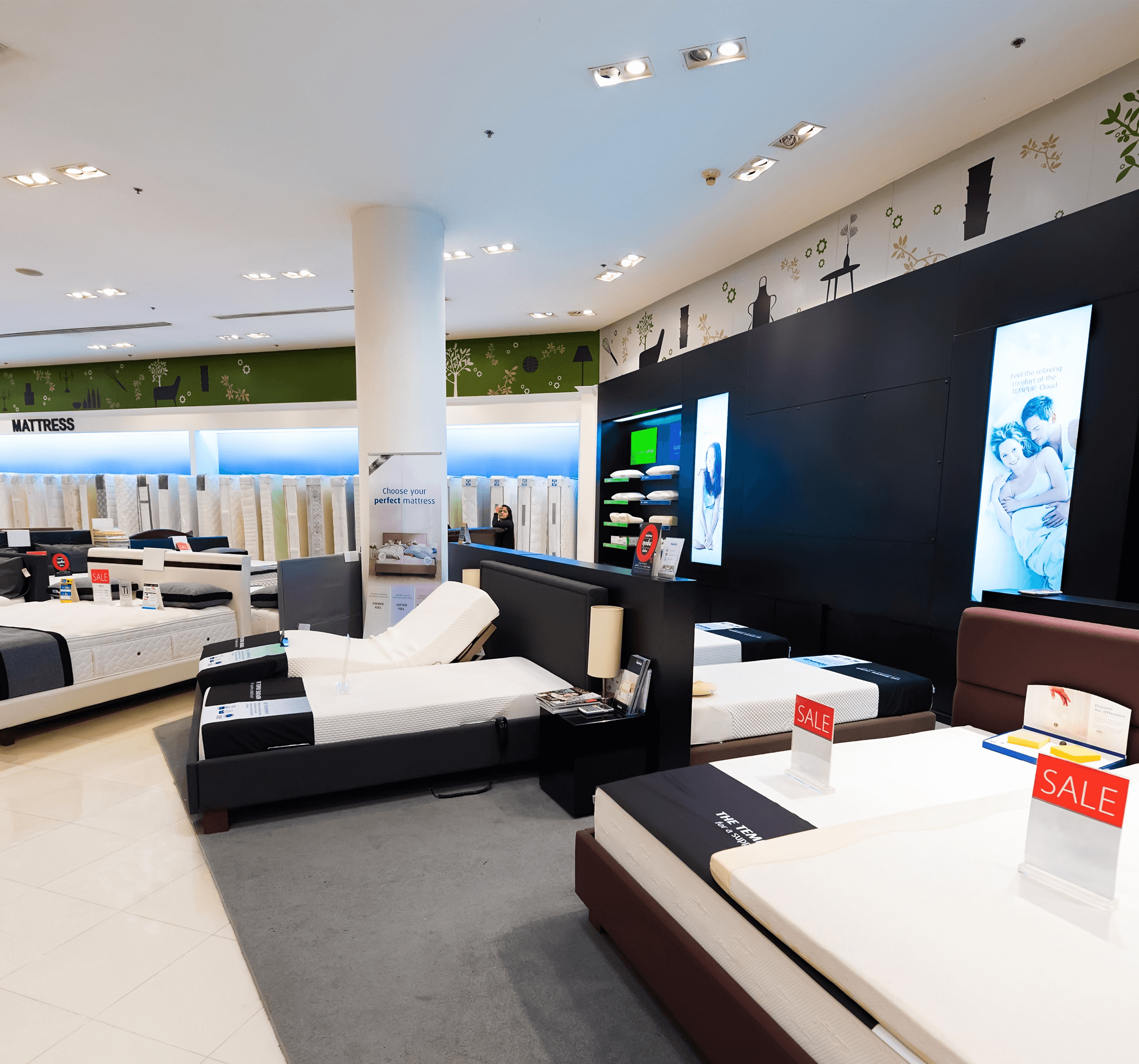
India’s mattress industry is undergoing a major revolution as the boundary between digital and physical retail dissolves. By 2026, the market is defined by a convergence where online-first disruptors are opening experience centers and legacy retailers are adopting sophisticated digital tools. This shift is driven by a new consumer who researches specifications and prices online but still requires the tactile reassurance of an in-store trial before purchasing.
In 2026, India’s mattress market is witnessing a dramatic convergence, online-only disruptors are now building their own showrooms, while legacy retailers fight to stay relevant in a world where consumers expect the same product, the same price and the same promise, whether it’s delivered via an app notification or a sales advisor in a neighbourhood store. The Rs. 10,000 mattress now symbolizes more than just affordability, it represents the new rule of the game, absolute parity across every channel.
June 10th 2026. Comfort Times Magazine

The Great Market Convergence
Digital-first brands, once celebrated for convenience and aggressive pricing, are realizing that mattresses remain a tactile category. Touch, feel, and in-person validation still matter. So, they are setting up experience centres that mirror their online catalogue. The same SKUs, the same specifications, the same prices, eliminating the last excuse for a consumer to hesitate. What began as a pure-play e-commerce model has evolved into a full ecosystem, where data collected online fuels offline trial experiences, and in-store sleep diagnostics trigger hyper-personalised online remarketing. India’s mattress industry, therefore, is no longer defined by channels but by continuity. The distinction between online and offline is rapidly dissolving, replaced by a unified expectation of consistency. Today’s mattress buyer is informed, connected, and decisive. Product research, once limited to in-store conversations, is now conducted extensively online.
June 10th 2026. Comfort Times Magazine
Consumers compare specs, read reviews, evaluate price points, and shortlist options even before stepping into a store. Yet, mattresses remain a deeply tactile category. Comfort, support, and firmness cannot be fully understood through descriptions or digital visuals. The result is a dual behavior pattern. The thing is, researching online and validating offline is creating a new kind of consumer who is digital-first but still seeks physical reassurance before making a decision.
At the ground level, the mattress purchase journey continues to reflect a duality that industry players cannot ignore. As pointed out by Mr. Pankaj Gupta, Co-Founder of RP Foam Home Private Limited, “The 25–30 age group, in particular, is deeply accustomed to digital platforms, driving brands to strengthen their online presence even if their core remains offline. Yet, this shift does not fully translate into confidence in product categories like mattresses, where tactile assurance still plays a decisive role.”
The Modern Consumer Journey
Mr. Abhishek Sharma, Managing Director at Bhagwati Foam Limited, observes, this is not merely a shift in channels but a structural transformation. “India’s mattress industry is undergoing a structural transformation that goes far beyond the visible rise of online brands or the expansion of retail showrooms. What is unfolding is a deeper convergence; one that is redefining how products are made, priced, distributed, and experienced” he adds. He also notes that today’s buyer moves fluidly between digital and physical environments, often within the same purchase journey.
“A product discovered through a late-night scroll may be tested in-store the next day and purchased online later that evening. The expectation is no longer convenience alone, it is consistency.”
The early disruption in the market came from digital-first brands that challenged traditional pricing and distribution models by eliminating intermediaries and selling directly to consumers. This shift was accelerated by the emergence of the “mattress-in-a-box” concept, where mattresses are compressed, rolled, and delivered in compact packaging. Popularised globally by Casper, the model found quick acceptance in India, particularly among younger, urban consumers. Brands such as Wakefit, Sleepyhead,
June 10th 2026. Comfort Times Magazine
This shift places traditional manufacturers and retailers at a critical crossroads. Legacy advantages such as local trust, long-standing relationships, and wide distribution are no longer sufficient in an era defined by channel symmetry. Manufacturers are being compelled to standardise pricing across platforms to prevent undercutting by marketplaces or even their own retail partners. At the same time, there is a growing need to build unified inventory systems so that customers walking into a store encounter exactly what they saw online. Many are also investing in owned retail formats, not to replace distributors, but to establish a benchmark for brand experience and maintain control over how their products are presented. Increasingly, data-linked selling is becoming central, where every in-store trial or online interaction feeds into CRM systems that help nurture long-term customer relationships across the typical eight-to-ten-year replacement cycle. This shift places traditional manufacturers and retailers at a critical crossroads. Legacy advantages such as local trust, long-standing relationships, and wide Retailers, meanwhile, are being forced to rethink their role entirely.

June 10th 2026. Comfort Times Magazine
The transition is from being mere sellers to becoming sleep consultants, equipped with digital tools and, in some cases, biometric mapping technologies that enable personalised recommendations. Stores are evolving into tech-enabled environments rather than simple product warehouses. Many are also leveraging omnichannel fulfilment models, allowing customers to make a purchase in-store but receive delivery through the brand’s centralised logistics network. In this new environment, competing on price is no longer viable. Price parity has become a baseline expectation; the real differentiator is experience.
Retailers, particularly large-format players with established distribution networks, continue to emphasise the irreplaceable value of in-store experience. The ability to physically test different products, understand variations in comfort, and receive guided recommendations remains central to decision-making. Equally important is the role of after-sales service, an area where physical retail often holds an advantage. Return policies and trial offers, while attractive in theory, can become complex in execution, reinforcing the importance of direct customer interaction. At the same time, retailers acknowledge the changing landscape: digitally influenced consumers increasingly compare online prices even while standing in-store, making integration, not resistance, the only viable path forward.
The rise of the mattress-in-a-box model deserves closer attention, as it represents one of the most significant innovations in the category. The concept, which originated in the United States, fundamentally altered the way mattresses could be stored, transported, and sold. By compressing and vacuum-sealing mattresses into compact packages, manufacturers were able to dramatically reduce logistics costs while improving delivery efficiency.
June 10th 2026. Comfort Times Magazine

The Concept of Bed-In-A-Box
The concept of the “bed-in-a-box” did not emerge overnight; it has its roots in early experimentation with compression technology in the United States. As early as 2004, entrepreneur Bill Bradley, a machine builder based in Tennessee, began working on a system that could compress a queen-size mattress into a compact package suitable for standard courier networks such as FedEx and UPS. While he had the engineering expertise, the challenge lay in finding the right foam that could withstand compression without compromising performance. This led to a collaboration with foam manufacturer NCFI in North Carolina, an early partnership that proved critical in making the concept viable. The focus from the outset was not just on compression, but on ensuring that the mattress retained its comfort, durability, and quality after unpacking, recognizing that customer satisfaction would determine the model’s success. In 2006, this effort culminated in the launch of Bed-in-a-box, marking one of the earliest commercial implementations of the idea.
June 10th 2026. Comfort Times Magazine
While the concept initially attracted limited attention, it laid the foundation for a fundamental shift in distribution. The real inflection point came a few years later, when digitally native brands like Tuft & Needle and Casper reimagined the model, combining compression technology with direct-to-consumer e-commerce, simplified product lines, and aggressive trial policies. What began as a logistical innovation soon evolved into a full-fledged business model. Over time, improvements in foam engineering, packaging techniques, and fulfilment systems further strengthened its scalability. By the late 2010s, the model had gained widespread industry recognition and consumer acceptance, eventually influencing mattress markets across the world, including India, where it found particular resonance among younger, convenience-driven buyers.
Globally, the model gained visibility when companies like Casper and Tuft & Needle began targeting younger, digitally native consumers who were comfortable making high-value purchases online. What initially appeared to be a niche experiment soon evolved into a category-defining shift. By the mid-2010s, boxed mattresses were being recognised as one of the most disruptive innovations in retail.
India followed this trajectory with a slight lag, but with equal intensity. As internet penetration increased and e-commerce platforms expanded their reach, the concept found a ready audience.
The appeal lay not only in convenience, but also affordability. By eliminating intermediaries and reducing distribution costs, brands were able to offer competitive pricing, positioning their products as an accessible option for first-time buyers. The COVID-19 pandemic further accelerated this transition. With mobility restrictions and heightened health concerns, consumers became more comfortable purchasing mattresses online. Website traffic increased, digital engagement surged, and trial-based selling models gained wider acceptance. What was once considered a high-risk purchase category began to normalise in the online space.
However, this growth has not been without limitations. While mattress-in-a-box models are highly efficient for standardised products, they are less suited for highly customised or premium offerings. Moreover, the uniformity required for compression often results in products that fall within a narrow comfort range, typically medium-firm, limiting personalisation.
Innovations such as the mattress-in-a-box have undoubtedly improved logistics and expanded access, but their positioning remains largely within the budget segment. While convenience and pricing make them attractive, industry voices caution against over-reliance on digital narratives. Consumers are increasingly aware that online claims, ranging from deep discounts to extended trial periods, do not always translate seamlessly into real-world experience. This growing scepticism highlights a deeper issue: trust cannot be fully digitised in a high-involvement category like mattresses.
This reinforces a critical insight: while online channels can scale rapidly, they cannot fully replace the nuanced, individualised experience that physical retail provides. Instead, they serve as an entry point, expanding access, driving awareness, and enabling comparison, while leaving the final validation to offline touchpoints.
This convergence is also reflected in the perspective of traditional manufacturers. Mr. Pankaj Gupta points out that while online buying has increased significantly, the nature of the product still demands physical validation. “If you are looking for a mattress after experiencing the comfort, it is better to buy from stores. At the same time, the tendency to buy online has increased considerably,” he says. He adds that while his company operates across both channels, its legacy experience of over five decades and its nationwide network continue to anchor its retail presence. At the same time, he acknowledges a generational shift. “Younger consumers, especially in the 25-30 age group, prefer online purchases as they are more accustomed to such platforms. That is why we ensure that our online presence is strong.” He also notes that innovations such as mattress-in-a-box have improved logistics, but are largely concentrated in the budget segment.
June 10th 2026. Comfort Times Magazine

Strategic shifts for manufacturers
and retailers
For retailers, however, the shift has been more disruptive. Price transparency has fundamentally altered the dynamics of in-store selling. Customers frequently compare online prices in real time, often using them as leverage during negotiations. As Mr. Vishnu Kripa, Sales Manager at Sunitha Furniture, a large-scale furniture retailer based in Kannur, Keralam, with a distribution network across South India, and even some parts of North India explains, “Today, everything is moving online, but when it comes to mattresses, you cannot replace the physical experience. Comfort is something a customer needs to feel before making a decision. Every individual has different comfort needs, and that level of personalisation is only possible in a store.” He notes that walk-in customers continue to form a strong base, as retail offers tangibility and value. “Customers can compare different brands, physically test products, and make a more confident choice,” he says.
June 10th 2026. Comfort Times Magazine
At the same time, he acknowledges the growing influence of digital behaviour, particularly among younger buyers. “Gen-Z customers are more comfortable with technology and tend to explore online options first. Many of them check prices online even while they are in the store,” he adds. He also raises concerns about the practical challenges of online models. “Offers like 100-day trials sound attractive, but in reality, replacements after extended use are not always easy. After-sales support remains a key strength of physical retail.” Looking ahead, he believes integration is inevitable. “The integration of online and offline channels will become the norm. Both will have to work together to meet customer expectations.”
Not all consumers are entirely convinced by the promises of online platforms. Mr. Jobil Sebastian, a hospitality industry professional, cautions against relying solely on digital claims. “Solely believing the advertisements of online sellers can be a trap. The claims and offers do not always translate into reality in the same way,” he says, drawing from personal experience. He recalls having to replace a mattress purchased online within months, eventually opting for one from a local store. “It was marketed as medicated and orthopedic, but in reality, it didn’t deliver on those promises,” he adds.
June 10th 2026. Comfort Times Magazine

In this evolving environment, the distinction between online and offline is increasingly irrelevant from the consumer’s point of view. A typical journey may involve discovering a product online, comparing prices across platforms, visiting a store for validation, and finally completing the purchase digitally. At every stage, the expectation is uniformity. Any inconsistency in pricing, product specifications, or service can erode trust and disrupt the purchase decision.
Retailers are therefore being pushed to reinvent themselves. The future of retail lies not in competing on price, but in enhancing experience. Stores are evolving into spaces for guided trials, personalised recommendations, and comparative demonstrations.
The salesperson is no longer merely a seller, but a consultant, someone who understands individual needs and guides the customer towards the right solution.
To maintain a competitive edge, brands must first standardize pricing across all channels to prevent undercutting by aggressive marketplaces or their own retail partners. This consistency is bolstered by building unified inventory visibility, ensuring a consumer walking into a physical store encounters exactly what they saw online. Beyond logistics, companies should invest in owned retail formats, not as a replacement for distributors, but as a strategic tool to benchmark the brand experience and set a definitive tone for the category. Finally, the strategy is solidified by adopting data-linked selling, where every trial, preference, and mapping scan ties directly back to CRM systems designed to nurture consumers throughout the extensive 8–10 year replacement cycle.
The mattress industry is currently undergoing its most dramatic reset in decades as online players move offline, offline players are forced online, and an empowered, informed, and impatient consumer begins calling the shots. To survive this shift, retailers must transition from being mere sellers to becoming sleep consultants armed with digital tools and biometric mapping, while simultaneously upgrading physical stores into tech-enabled zones rather than simple product warehouses. By leveraging omnichannel fulfillment, retailers can allow customers to order in-store while receiving goods via the brand’s direct delivery ecosystem, effectively shifting the battlefield to compete on experience rather than price, which is now a baseline expectation rather than a competitive edge. Ultimately, the winners of this reset will be the brands and retailers who deliver one consistent promise across all formats: the right product, the right price, and the right experience, everywhere.
June 10th 2026. Comfort Times Magazine
Industry challenges and skepticism
At the same time, the market itself is becoming more complex. The range of products has expanded significantly, from orthopedic mattresses designed for spinal support to cooling technologies, hybrid constructions, and customized firmness options. This reflects a broader shift in perception, where sleep is increasingly viewed as a critical component of health and well-being.
Behind these visible changes lies a deeper operational transformation. The adoption of mattress-in-a-box models has streamlined logistics, enabling faster delivery and wider reach. Advances in supply chain systems are improving inventory visibility across channels, while data analytics is allowing brands to understand consumer behaviour in greater detail.
This convergence of digital and physical channels has given rise to what is often described as a phygital model, a seamless blend of both worlds. Digital platforms drive discovery, physical stores provide validation, and integrated systems ensure continuity.
The mattress industry, therefore, is undergoing its most dramatic reset. Online players are moving offline, while traditional retailers are being compelled to build a digital presence. At the centre of this transformation is the consumer, who is empowered and informed. The expectations are clear and uncompromising. The brands and retailers that will succeed are those that can deliver one consistent promise across every format: the right product, the right price, and the right experience always. Ultimately, the transformation of the mattress industry is not about the dominance of one format over another. It is about alignment. For manufacturers, it means balancing scale with consistency. For retailers, it means evolving from sellers to advisors. For digital-first brands, it means extending convenience into experience. In the end, while the product may be a mattress, what is truly being sold is something far more intangible - trust. And in an omnichannel world, trust is built not in one place, but across every interaction. are no longer sufficient in an era defined by channel symmetry.
Manufacturers are being compelled to standardise pricing across platforms to prevent undercutting by marketplaces or even their own retail partners. At the same time, there is a growing need to build unified inventory systems so that customers walking into a store encounter exactly what they saw online. Many are also investing in owned retail formats, not to replace distributors, but to establish a benchmark for brand experience and maintain control over how their products are presented. Increasingly, data-linked selling is becoming central, where every in-store trial or online interaction feeds into CRM systems that help nurture long-term customer relationships across the typical eight-to-ten-year replacement cycle.
The Great Market Convergence
Digital-first brands, once celebrated for convenience and aggressive pricing, are realizing that mattresses remain a tactile category. Touch, feel, and in-person validation still matter, So, they are setting up experience centres that mirror their online catalogue. The same SKUs, the same specifications, the same prices, eliminating the last excuse for a consumer to hesitate. What began as a pure-play e-commerce model has evolved into a full ecosystem, where data collected online fuels offline trial experiences, and in-store sleep diagnostics trigger hyper-personalised online remarketing.India’s mattress industry, therefore, is no longer defined by channels but by continuity. The distinction between online and offline is rapidly dissolving, replaced by a unified expectation of consistency. Today’s mattress buyer is informed, connected, and decisive. Product research, once limited to in-store conversations, is now conducted extensively online.
India’s mattress industry is undergoing a major revolution as the boundary between digital and physical retail dissolves. By 2026, the market is defined by a convergence where online-first disruptors are opening experience centers and legacy retailers are adopting sophisticated digital tools. This shift is driven by a new consumer who researches specifications and prices online but still requires the tactile reassurance of an in-store trial before purchasing.
In 2026, India’s mattress market is witnessing a dramatic convergence, online-only disruptors are now building their own showrooms, while legacy retailers fight to stay relevant in a world where consumers expect the same product, the same price and the same promise, whether it’s delivered via an app notification or a sales advisor in a neighbourhood store. The Rs. 10,000 mattress now symbolizes more than just affordability, it represents the new rule of the game, absolute parity across every channel.
Consumers compare specs, read reviews, evaluate price points, and shortlist options even before stepping into a store. Yet, mattresses remain a deeply tactile category. Comfort, support, and firmness cannot be fully understood through descriptions or digital visuals. The result is a dual behavior pattern. The in thing is research online, validate offline, creating a new kind of consumer who is digital-first but still seeks physical reassurance before making a decision.
At the ground level, the mattress purchase journey continues to reflect a duality that industry players cannot ignore. As pointed out by Mr. Pankaj Gupta, Co-Founder of RP Foam Home Private Limited, “The 25–30 age group, in particular, is deeply accustomed to digital platforms, driving brands to strengthen their online presence even if their core remains offline. Yet, this shift does not fully translate into confidence in product categories like mattresses, where tactile assurance still plays a decisive role.”
The Modern Consumer Journey
Mr. Abhishek Sharma, Managing Director at Bhagwati Foam Limited, observes, this is not merely a shift in channels but a structural transformation. “India’s mattress industry is undergoing a structural transformation that goes far beyond the visible rise of online brands or the expansion of retail showrooms. What is unfolding is a deeper convergence; one that is redefining how products are made, priced, distributed, and experienced” he adds. He also notes that today’s buyer moves fluidly between digital and physical environments, often within the same purchase journey.
“A product discovered through a late-night scroll may be tested in-store the next day and purchased online later that evening. The expectation is no longer convenience alone, it is consistency.”
The early disruption in the market came from digital-first brands that challenged traditional pricing and distribution models by eliminating intermediaries and selling directly to consumers. This shift was accelerated by the emergence of the “mattress-in-a-box” concept, where mattresses are compressed, rolled, and delivered in compact packaging. Popularised globally by Casper, the model found quick acceptance in India, particularly among younger, urban consumers. Brands such as Wakefit, Sleepyhead,
The transition is from being mere sellers to becoming sleep consultants, equipped with digital tools and, in some cases, biometric mapping technologies that enable personalised recommendations. Stores are evolving into tech-enabled environments rather than simple product warehouses. Many are also leveraging omnichannel fulfilment models, allowing customers to make a purchase in-store but receive delivery through the brand’s centralised logistics network. In this new environment, competing on price is no longer viable. Price parity has become a baseline expectation; the real differentiator is experience.
Retailers, particularly large-format players with established distribution networks, continue to emphasise the irreplaceable value of in-store experience. The ability to physically test different products, understand variations in comfort, and receive guided recommendations remains central to decision-making. Equally important is the role of after-sales service, an area where physical retail often holds an advantage. Return policies and trial offers, while attractive in theory, can become complex in execution, reinforcing the importance of direct customer interaction. At the same time, retailers acknowledge the changing landscape: digitally influenced consumers increasingly compare online prices even while standing in-store, making integration, not resistance, the only viable path forward.
The rise of the mattress-in-a-box model deserves closer attention, as it represents one of the most significant innovations in the category. The concept, which originated in the United States, fundamentally altered the way mattresses could be stored, transported, and sold. By compressing and vacuum-sealing mattresses into compact packages, manufacturers were able to dramatically reduce logistics costs while improving delivery efficiency.
The Concept of
Bed-In-A-Box
The concept of the “bed-in-a-box” did not emerge overnight; it has its roots in early experimentation with compression technology in the United States. As early as 2004, entrepreneur Bill Bradley, a machine builder based in Tennessee, began working on a system that could compress a queen-size mattress into a compact package suitable for standard courier networks such as FedEx and UPS. While he had the engineering expertise, the challenge lay in finding the right foam that could withstand compression without compromising performance. This led to a collaboration with foam manufacturer NCFI in North Carolina, an early partnership that proved critical in making the concept viable. The focus from the outset was not just on compression, but on ensuring that the mattress retained its comfort, durability, and quality after unpacking, recognizing that customer satisfaction would determine the model’s success. In 2006, this effort culminated in the launch of Bed-in-a-box, marking one of the earliest commercial implementations of the idea.
While the concept initially attracted limited attention, it laid the foundation for a fundamental shift in distribution. The real inflection point came a few years later, when digitally native brands like Tuft & Needle and Casper reimagined the model, combining compression technology with direct-to-consumer e-commerce, simplified product lines, and aggressive trial policies. What began as a logistical innovation soon evolved into a full-fledged business model. Over time, improvements in foam engineering, packaging techniques, and fulfilment systems further strengthened its scalability. By the late 2010s, the model had gained widespread industry recognition and consumer acceptance, eventually influencing mattress markets across the world, including India, where it found particular resonance among younger, convenience-driven buyers.
Globally, the model gained visibility when companies like Casper and Tuft & Needle began targeting younger, digitally native consumers who were comfortable making high-value purchases online. What initially appeared to be a niche experiment soon evolved into a category-defining shift. By the mid-2010s, boxed mattresses were being recognised as one of the most disruptive innovations in retail.
India followed this trajectory with a slight lag, but with equal intensity. As internet penetration increased and e-commerce platforms expanded their reach, the concept found a ready audience.
The appeal lay not only in convenience, but alsoaffordability. By eliminating intermediaries and reducing distribution costs, brands were able to offer competitive pricing, positioning their products as an accessible option for first-time buyers. The COVID-19 pandemic further accelerated this transition. With mobility restrictions and heightened health concerns, consumers became more comfortable purchasing mattresses online. Website traffic increased, digital engagement surged, and trial-based selling models gained wider acceptance. What was once considered a high-risk purchase category began to normalise in the online space.
However, this growth has not been without limitations. While mattress-in-a-box models are highly efficient for standardised products, they are less suited for highly customised or premium offerings. Moreover, the uniformity required for compression often results in products that fall within a narrow comfort range, typically medium-firm, limiting personalisation.
Innovations such as the mattress-in-a-box have undoubtedly improved logistics and expanded access, but their positioning remains largely within the budget segment. While convenience and pricing make them attractive, industry voices caution against over-reliance on digital narratives. Consumers are increasingly aware that online claims, ranging from deep discounts to extended trial periods, do not always translate seamlessly into real-world experience. This growing scepticism highlights a deeper issue: trust cannot be fully digitised in a high-involvement category like mattresses.
This reinforces a critical insight: while online channels can scale rapidly, they cannot fully replace the nuanced, individualised experience that physical retail provides. Instead, they serve as an entry point, expanding access, driving awareness, and enabling comparison, while leaving the final validation to offline touchpoints.
This convergence is also reflected in the perspective of traditional manufacturers. Mr. Pankaj Gupta points out that while online buying has increased significantly, the nature of the product still demands physical validation. “If you are looking for a mattress after experiencing the comfort, it is better to buy from stores. At the same time, the tendency to buy online has increased considerably,” he says. He adds that while his company operates across both channels, its legacy experience of over five decades and its nationwide network continue to anchor its retail presence. At the same time, he acknowledges a generational shift. “Younger consumers, especially in the 25-30 age group, prefer online purchases as they are more accustomed to such platforms. That is why we ensure that our online presence is strong.” He also notes that innovations such as mattress-in-a-box have improved logistics, but are largely concentrated in the budget segment.
Strategic shifts for manufacturers and retailers
The concept of the “bed-in-a-box” did not emerge overnight; it has its roots in early experimentation with compression technology in the United States. As early as 2004, entrepreneur Bill Bradley, a machine builder based in Tennessee, began working on a system that could compress a queen-size mattress into a compact package suitable for standard courier networks such as FedEx and UPS. While he had the engineering expertise, the challenge lay in finding the right foam that could withstand compression without compromising performance. This led to a collaboration with foam manufacturer NCFI in North Carolina, an early partnership that proved critical in making the concept viable. The focus from the outset was not just on compression, but on ensuring that the mattress retained its comfort, durability, and quality after unpacking, recognizing that customer satisfaction would determine the model’s success. In 2006, this effort culminated in the launch of Bed-in-a-box, marking one of the earliest commercial implementations of the idea.
For retailers, however, the shift has been more disruptive. Price transparency has fundamentally altered the dynamics of in-store selling. Customers frequently compare online prices in real time, often using them as leverage during negotiations. As Mr. Vishnu Kripa, Sales Manager at Sunitha Furniture, a large-scale furniture retailer based in Kannur, Keralam, with a distribution network across South India, and even some parts of North India explains, “Today, everything is moving online, but when it comes to mattresses, you cannot replace the physical experience. Comfort is something a customer needs to feel before making a decision. Every individual has different comfort needs, and that level of personalisation is only possible in a store.” He notes that walk-in customers continue to form a strong base, as retail offers tangibility and value. “Customers can compare different brands, physically test products, and make a more confident choice,” he says.
At the same time, he acknowledges the growing influence of digital behaviour, particularly among younger buyers. “Gen-Z customers are more comfortable with technology and tend to explore online options first. Many of them check prices online even while they are in the store,” he adds. He also raises concerns about the practical challenges of online models. “Offers like 100-day trials sound attractive, but in reality, replacements after extended use are not always easy. After-sales support remains a key strength of physical retail.” Looking ahead, he believes integration is inevitable. “The integration of online and offline channels will become the norm. Both will have to work together to meet customer expectations.”
Not all consumers are entirely convinced by the promises of online platforms. Mr. Jobil Sebastian, a hospitality industry professional, cautions against relying solely on digital claims. “Solely believing the advertisements of online sellers can be a trap. The claims and offers do not always translate into reality in the same way,” he says, drawing from personal experience. He recalls having to replace a mattress purchased online within months, eventually opting for one from a local store. “It was marketed as medicated and orthopedic, but in reality, it didn’t deliver on those promises,” he adds.
In this evolving environment, the distinction between online and offline is increasingly irrelevant from the consumer’s point of view. A typical journey may involve discovering a product online, comparing prices across platforms, visiting a store for validation, and finally completing the purchase digitally. At every stage, the expectation is uniformity. Any inconsistency in pricing, product specifications, or service can erode trust and disrupt the purchase decision.
Retailers are therefore being pushed to reinvent themselves. The future of retail lies not in competing on price, but in enhancing experience. Stores are evolving into spaces for guided trials, personalised recommendations, and comparative demonstrations.
The salesperson is no longer merely a seller, but a consultant, someone who understands individual needs and guides the customer towards the right solution.
To maintain a competitive edge, brands must first standardize pricing across all channels to prevent undercutting by aggressive marketplaces or their own retail partners. This consistency is bolstered by building unified inventory visibility, ensuring a consumer walking into a physical store encounters exactly what they saw online. Beyond logistics, companies should invest in owned retail formats, not as a replacement for distributors, but as a strategic tool to benchmark the brand experience and set a definitive tone for the category. Finally, the strategy is solidified by adopting data-linked selling, where every trial, preference, and mapping scan ties directly back to CRM systems designed to nurture consumers throughout the extensive 8–10 year replacement cycle.
The mattress industry is currently undergoing its most dramatic reset in decades as online players move offline, offline players are forced online, and an empowered, informed, and impatient consumer begins calling the shots. To survive this shift, retailers must transition from being mere sellers to becoming sleep consultants armed with digital tools and biometric mapping, while simultaneously upgrading physical stores into tech-enabled zones rather than simple product warehouses. By leveraging omnichannel fulfillment, retailers can allow customers to order in-store while receiving goods via the brand’s direct delivery ecosystem, effectively shifting the battlefield to compete on experience rather than price, which is now a baseline expectation rather than a competitive edge. Ultimately, the winners of this reset will be the brands and retailers who deliver one consistent promise across all formats: the right product, the right price, and the right experience, everywhere.
Consumers compare specs, read reviews, evaluate price points, and shortlist options even before stepping into a store. Yet, mattresses remain a deeply tactile category. Comfort, support, and firmness cannot be fully understood through descriptions or digital visuals. The result is a dual behavior pattern. The in thing is research online, validate offline, creating a new kind of consumer who is digital-first but still seeks physical reassurance before making a decision.
At the ground level, the mattress purchase journey continues to reflect a duality that industry players cannot ignore. As pointed out by Mr. Pankaj Gupta, Co-Founder of RP Foam Home Private Limited, “The 25–30 age group, in particular, is deeply accustomed to digital platforms, driving brands to strengthen their online presence even if their core remains offline. Yet, this shift does not fully translate into confidence in product categories like mattresses, where tactile assurance still plays a decisive role.”
Industry challenges and skepticism
At the same time, the market itself is becoming more complex. The range of products has expanded significantly, from orthopedic mattresses designed for spinal support to cooling technologies, hybrid constructions, and customized firmness options. This reflects a broader shift in perception, where sleep is increasingly viewed as a critical component of health and well-being.
Behind these visible changes lies a deeper operational transformation. The adoption of mattress-in-a-box models has streamlined logistics, enabling faster delivery and wider reach. Advances in supply chain systems are improving inventory visibility across channels, while data analytics is allowing brands to understand consumer behaviour in greater detail.
This convergence of digital and physical channels has given rise to what is often described as a phygital model, a seamless blend of both worlds. Digital platforms drive discovery, physical stores provide validation, and integrated systems ensure continuity.
The mattress industry, therefore, is undergoing its most dramatic reset. Online players are moving offline, while traditional retailers are being compelled to build a digital presence. At the centre of this transformation is the consumer, who is empowered and informed. The expectations are clear and uncompromising. The brands and retailers that will succeed are those that can deliver one consistent promise across every format: the right product, the right price, and the right experience always. Ultimately, the transformation of the mattress industry is not about the dominance of one format over another. It is about alignment. For manufacturers, it means balancing scale with consistency. For retailers, it means evolving from sellers to advisors. For digital-first brands, it means extending convenience into experience. In the end, while the product may be a mattress, what is truly being sold is something far more intangible - trust. And in an omnichannel world, trust is built not in one place, but across every interaction. are no longer sufficient in an era defined by channel symmetry.
Manufacturers are being compelled to standardise pricing across platforms to prevent undercutting by marketplaces or even their own retail partners. At the same time, there is a growing need to build unified inventory systems so that customers walking into a store encounter exactly what they saw online. Many are also investing in owned retail formats, not to replace distributors, but to establish a benchmark for brand experience and maintain control over how their products are presented. Increasingly, data-linked selling is becoming central, where every in-store trial or online interaction feeds into CRM systems that help nurture long-term customer relationships across the typical eight-to-ten-year replacement cycle.
This shift places traditional manufacturers and retailers at a critical crossroads. Legacy advantages such as local trust, long-standing relationships, and wide distribution are no longer sufficient in an era defined by channel symmetry. Manufacturers are being compelled to standardise pricing across platforms to prevent undercutting by marketplaces or even their own retail partners. At the same time, there is a growing need to build unified inventory systems so that customers walking into a store encounter exactly what they saw online. Many are also investing in owned retail formats, not to replace distributors, but to establish a benchmark for brand experience and maintain control over how their products are presented. Increasingly, data-linked selling is becoming central, where every in-store trial or online interaction feeds into CRM systems that help nurture long-term customer relationships across the typical eight-to-ten-year replacement cycle. This shift places traditional manufacturers and retailers at a critical crossroads. Legacy advantages such as local trust, long-standing relationships, and wide Retailers, meanwhile, are being forced to rethink their role entirely.